
If you educate a man, you educate an individual. But if you educate a woman, you educate a nation. ~ African Proverb
The education of women is the best way to save the environment. ~ E. O. Wilson
What comes to your mind when I say the words “health” and “healthcare”? Do you get confused or misled by the language of healthcare or medical terminology? Navigating the healthcare system can be complex and it is important to have some health literacy skills to understand, access and utilize health services.
“Health Literacy is the degree to which individuals have the capacity to obtain, communicate, process, and understand basic health information and services needed to make appropriate health decisions.” (Centre for Disease Control and Prevention, 2009)
Over the years, the definition of health literacy has evolved and the significant role it plays in health delivery and outcomes. Health literacy is essential to ensure a clear communication between healthcare providers and the public to understand and use health information in all contexts. It involves a wide range of skills including listening, reading, writing, speaking, numeracy and critical analysis and also interaction skills (The Calgary Charter on Health Literacy).
A woman’s health literacy has the potential of impacting the health outcome of her entire family. It has been identified by numerous studies that most women have little to no idea about their health or how their body works and have difficulty understanding and acting on health information. Health literacy is very important as it does not impact only women’s health but also their children. According to the Agency for Healthcare Research and Quality, “People with low health literacy may have difficulty interpreting medication labels and health messages, use of emergency rooms and are hospitalized more often, be less likely to get the flu vaccine, and more likely to report their health as poor.”
Health literacy is a complex issue and a serious problem. While a person’s general literacy skills can be related to their health literacy, several factors play a significant role. A person with high literacy skills may have a lower degree of health literacy in a specific context, such as being in a new country or when experiencing a stressful situation. This is similar in the case of newcomers including refugees, asylum seekers and migrants. The language and culture of the woman, healthcare professionals and health systems interact to influence or affect their health literacy level.
Why is health literacy important to women?
- Health literacy gives women the ability to engage in health promotion and preventive actions/ behaviours for themselves and to care for the children. These effects can be seen in some conditions like taking care for prenatal period at pregnancy, duration of time to follow up at disease, screening rate for prevention of cervical cancer.
- Low health literacy negatively affects a woman’s health knowledge, preventive behavior, ability to navigate the healthcare system, and ability to care for her children. Without an adequate understanding of health care information, it is difficult for a woman to make informed decisions that will lead to satisfactory health care outcomes
- Raising women’s health literacy level will increase the responsibility and effect of family and community health in a positive way.
- When women have high knowledge about their health, they serve as role models or mentors to other women and girls and also contribute to policies related to women’s health.
What are the obstacles that challenge women’s access to health literacy?
- Patriarchal attitudes and deep-rooted stereotypes regarding the roles and responsibilities of women and men in the family can limit women from getting educated. In some cultures, women are not allowed to go to school because it is believed they will be married and their husbands will be responsible for them even in decisions concerning their sexual and reproductive health.
- In poor communities, lack of financial resources prevent girls and women from accessing early childhood or adult education to learn basic literacy skills and know about their bodies and health.
- Limited health literacy resources available especially in poor communities to educate girls and women. Lack of visual aids and technological tools to keep them informed about their health and enhance shared decision making. Some of these technologies include patient portals, telemedicine, and mobile applications.
What can be done to improve health literacy for women?
- Interventions to increase a woman’s health literacy include written education materials with proper reading level and design, clear communication, and education to increase health knowledge, self-efficacy, and self-advocacy skills.
- Health literacy education should be included in early childhood and adult education.
- Health professionals can adopt plain language that is culturally appropriate messages to ensure the information they provide are appropriate, understood and easy to use.
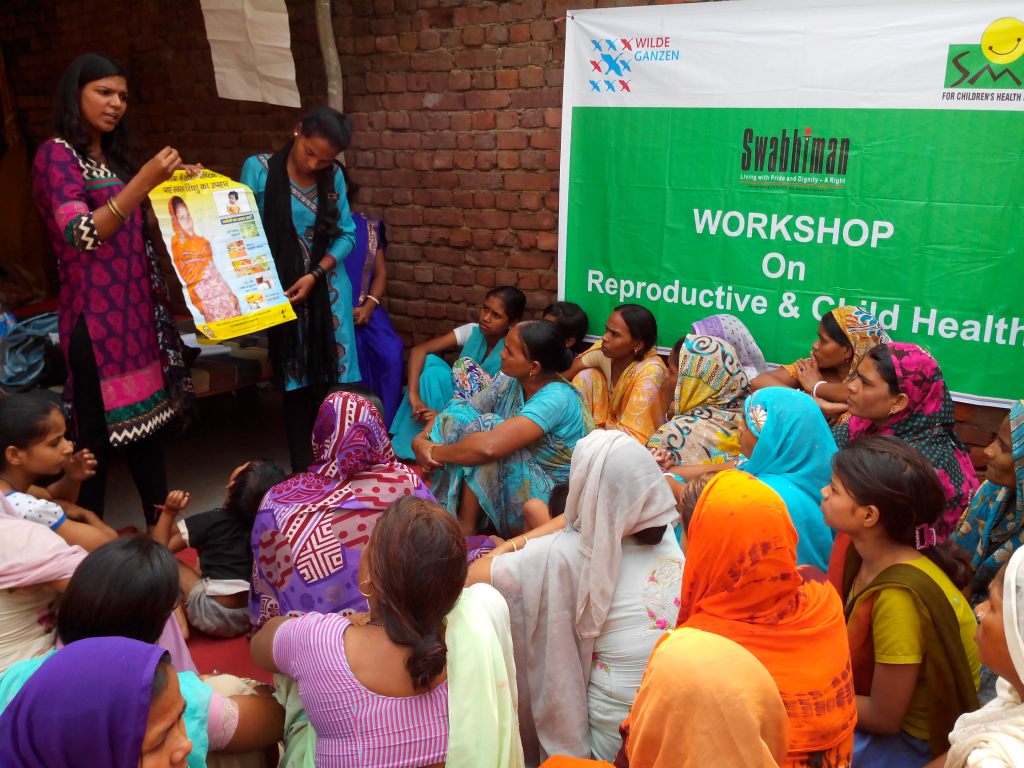
- Visual aids, such as simple illustrations, images, informational graphics and videos, can help patients better understand health information. It is important to choose meaningful visuals that are culturally sensitive, linguistically appropriate, are clearly labeled and captioned, and support your message.
Initiatives developed so far to improve women’s health literacy
- Women’s WorldWide Web (W4) is an online crowdfunding platform aiming to promote girls’ and women’s empowerment worldwide, in cities and in rural areas, in both developing and developed countries. They work to ensure that girls and women everywhere have access to education, healthcare, economic opportunities, the exercise of their rights, and political participation—all of which benefit girls and women.
- The Sadaat Aid Foundation (SAF) is a non-profit organization for sustainable approaches to social and humanitarian development. They believe literate communities have low infant mortality rates, education breaks cultural roles & empowers women and higher education is linked to proper family planning.
- Rockflower is a global venture philanthropy fund that connects catalytic funding to local initiatives in emerging economies seeking to improve and elevate the lives of women and girls.
- ProLiteracy is working with three African NGOs over the next three years on a health literacy project that focuses on integrating health education into basic literacy programs designed to address specific needs of women. We will work with partners in Liberia, South Africa, and Rwanda to help them develop instructional content that teaches literacy within the context of local needs, resources, and culture. The project will reach approximately 1,500 women in 20 impoverished communities without access to education or health services.
- Smile Foundation is an NGO in India directly benefitting over 750,000 children and their families every year, through more than 350 live welfare projects on education, healthcare, livelihood and women empowerment, in over 1000 remote villages and slums across 25 states of India.
- Plan International is an independent development and humanitarian organisation that advances children’s rights and equality for girls.
 The Feminist Health CIC