
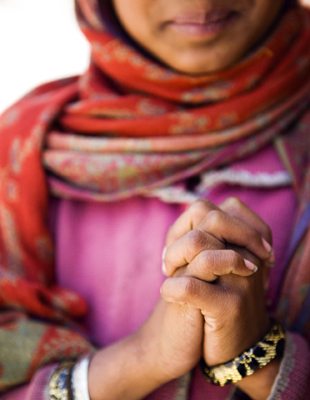
“Not in our name should any mother die while giving birth… Not in our name should anyone be denied access to basic health care, nor should a child or an adolescent be denied knowledge of and care for her/his body. Not in our name should any person be denied their human rights”
Call to Action from religious leaders , September 2014, UNFPA (United Nation Population Fund Activities)
Religion is an influential aspect of culture and religious practices and also influenced by other cultural dynamics. Culture and religious institutions and teachings are constantly changing in response to urbanization, global and national politics, new information and technologies and, rising education levels (especially for women).
UNFPA defines culture as “inherited patterns of shared meanings and common understandings”. Faith, belief, and/or religions are understood as an important facet of culture which has an important influence upon how people manage their lives, interpret their society and affects how people think and act.
Culture and religion are still sensitive subjects, considering the complexity of the topic and sheer numbers involved (84% of the world population is affiliated with a religious group).
When talking about woman health , we mostly talk about sexual and reproductive health and, a big range of actors are involved: religious institutions, religious leaders (male and female), faith-affiliated and faith-inspired service delivery mechanisms, government-sponsored or supported faith-based service partners and all other groups that extend from the global level to very local, community levels.
The size and share of contributions of cultural and religious actors to overall health care varies widely by country, as do the practical and legal arrangements that govern them.
A noteworthy feature in this regard is the presence of faith-inspired, or religious, women’s rights actors, openly espousing the term “religious (or faith-based) feminists”: supporting the criticality of women’s rights and gender justice and the need to reinterpret religious texts — and injunctions — with a view to girls’ and women’s welfare.
While the call for interpretation are deeply contentious in a terrain long dominated by patriarchy, religious texts are particularly debated when it comes to the issue of sexual and reproductive health.
Sexual and reproductive health is thus linked in many ways to cultural traditions and to religious beliefs and practices.
The 1994 ICPD (International conference on Population and Development) expanded the WHO Constitution’s definition of health and also affirmed that this applies to reproductive health that “also includes sexual health, the purpose of which is the enhancement of life and personal relations, and not merely counseling and care related to reproduction and sexually transmitted diseases.”
Some countries expressed reservation regarding the Plan Of Action (POA) which highlight the need of education and counseling on sexual health and personal relationships, informed and voluntary family planning services , prenatal care, maternal health care and comprehensive infant care services, safe abortion and prevention treatment.
The POA recognizes that in order to have “a satisfying and safe sex life, men and women should have the capability to reproduce and the freedom to decide, if, when and how often to do so.”
Some countries, mostly muslim-majority and Catholic-majority countries, got some reservation for the POA, being in conflict with their national laws, with their cultural and religious beliefs.
The five most influential global religious traditions we can consider are Hinduism, Buddhism , Judaism, Christianity and Islam. Each religious tradition is geographically, culturally, socioeconomically, and politically diverse and appreciation of this diversity is essential in discussing roles of traditions for sexual reproductive health and reproductive rights.
Legacies are historically situated and distinct to specific religious traditions, but they have in common that most focus on male perspective and disadvantage women.
Women capacity to decide on their health varies a lot depending of the religion:
Hinduism
Women’s and gender roles in Hindu traditions and communities are contextually and historically specific, multifaceted, and continuously evolving. Where various reinterpretation of authoritative Hindu sacred texts and goddess traditions support women’s rights, others see women as a subordinating figure. In family planning context Hinduism scholars have not taken any formal position as for abortion. A contemporary view privileges the life of the mother if the pregnancy is a threat to her or if the fetus has abnormalities. Violence against woman in Hindu communities, especially in India, is influenced by social norms and rapid socioeconomic changes that disrupt traditional communities. The so called “honour killing” and the “inferiour status” contribute the attitudes and pattern of women and gender based violence in Hindu religion
Buddhism
Historically, Buddhism saw the elevation of women’s status as possible only in conditioning them to be reborn as men. Recent ordinations of female monks (for example in Sri Lanka and Thailand) and their admission to monastic life is seen as progress. Changes are seen even in areas focusing on promoting education for girls and women, and dismantling gender-based violence, sexual exploitation, and slavery.
Support and respect leaders influence is fundamental for changes, like Dalai Lama comment “I’ve gained an awareness of the sensitivity of women’s issues; even in the 1960s and 1970s, I didn’t have much knowledge of this problem. The basic Buddhist stand on the question of equality between the genders is age-old. At the highest tantric levels, at the highest esoteric level, you must respect women: every woman”. For family planning and abortion issues, even though there is no formal opposition or at least some exceptions (abortion when pregnant results from sexual assault) many forms of violence persist in countries where Buddhist is the main tradition.
Jewish Religion
Utra-Orthodox Judaism is strongly patriarchal with strict limits on women’s behavior, whereas American Reform Judaism allows women rabbis.
Most Jewish scholars and faith support family planning even though marriage and family values are considered of high statues, and being a couple without a child a suffering sitution, making often women feel obligated to procreate and contraception methods might not be used for cultural pressure. Jewish teaching prohibit violence without gender distinction. However male dominance over women has also drawn on Holy Scriptures like in the Tanakh (Old Testament) “ hey shall bring out the damsel to the door of her father’s house and the men of her city shall stone her with stones that she die”. There have been different interpretation about this passages (men dominate over women, woman obligation to return their homes…) but something that has been reported is domestic abuse out of fear for the woman to be humiliated.
Christianity
Christian teachings have traditionally looked to one Genesis account of creation to assign women a position subordinate to men. Some branches of Christianity, notably in the Protestant traditions, have sought to highlight other biblical texts, such as the first Genesis account (Gen. 1:27) to reinterpret traditions to emphasize women’s equality as in God’s image; this is reflected, for example, in the ordination of women pastors in the Anglican, Baptist, Methodist, Presbyterian, Lutheran, Episcopalian and several African American churches. These recent developments are parallel to the political achievements of the women’s liberation movement in the 1950s and 1960s. Even when women are accepted into the clergy, many argue that gender discrimination still prevails in other parts of church contexts, where male-centred norms and patriarchal hierarchies persist. For example, the Roman Catholic and Orthodox Churches do not allow women to be ordained as priests or deacons, yet there is evidence that attitudes are changing.
Family planning in Christians community has changed a lot with modern days, where church position on contraception (only “natural” family planning trough abstinence) is ignored by many catholics couples. However in rural communities in particular , women may tend to avoid contraceptive methods for fear of stigmatization. Protestants hold different position, the same with Pentecostal and Evangelical (they are against contraception if used as abortificant or accepted in a marriage for the Orthodoxes). Another important issue is the use of condom, specially in countries where HIV/AIDS rates is still high, and here Catholic Church has officially spoken against condom distribution.
Position about abortion vary widely among the different Christian religion branches and although no Christian denomination support woman or gender-based violence, it is a persistent problem in Christian-majority countries and communities in both developed and developing countries, and in rich and poor communities. Reasons why include women’s lack of autonomy and attitudes towards their own sexuality: many women are taught and believe that their ‘duty’ is to satisfy ‘their’ man.
Muslim
The roles of women in Islamic law and society are the subject of considerable scholarship and debate and the muslim world is highly diverse in racial and/or ethnic and linguistic characteristic. Concerning family planning many leaders accept contraceptive methods, but formal policies , religious teachings positions vary from country to country with some limits. Nowadays several countries have worked with religious leaders to support family planning programs. Position on abortion varies too, with a majority of scholars holding that abortion can be permitted before 120 days of pregnancy, and abortion after this period is considered a “criminal offense”.However in certain cases, like dangers of the life of the mother, abortion after this deadline is possible.While in theory legal opinions regarding abortion are divided, in practice many Muslim communities espouse a rather “rigid approach” to contraception, taking women on clandestine and unsafe abortion, because of lack of knowledge about abortion law from women, strict religious interpretation, economic condition and attitudes of medical providers. Traditions justifying women violence are quite deeply embedded in some Muslim societies, even though in some islamic teachings there is no evidence of the support of any kind of violence against women. Islam has been used to justify violence in cases of adultery, fortification of for the “honor saving”.
For all these reason explained above there is the urgent need of actions with the involvement of religious leaders and community working together with institutions to provide a safer place, a good and fair interpretation of religious scriptures contextualized in our society.
There are many initiatives regarding these issues like:
- The Faith or Action Network: includes Christian , Muslims, Hindu and Buddhist religious leaders and organizations with the purpose to serve as a multi-faith platform for family planning and reproductive health advocacy at global, regional, national, and local level
- The Zimbabwe Association of Church-Related Hospitals (ZACH) : includes both Protestant and Catholic institutions and church-related health centres of which ZACH is comprised providing family planning services since 1982, including a range of contraceptive methods (such as injection, pill, implant and barrier methods)
- RACHA: RACHA, a Cambodian NGO, grew out of a partnership between USAID Cambodia and three Global Health Bureau initiatives. RACHA’s core programme areas include maternal, newborn and child heath as well as family planning. Their focus now includes the related issues of HIV/AIDS and infectious diseases (primarily TB and malaria)
- The Organisation of Islamic Cooperation (OIC) : in 2005, ministers, politicians and religious leaders from almost 50 Muslim countries met in Rabat, Morocco for the first “Islamic Conference of Ministers in Charge of Childhood” organized by OIC and the Islamic Educational, Scientific and Cultural Organization (ISESCO). The resulting “Rabat Declaration” emphasized that harmful and discriminatory practices against girls are against Islam and urged Muslim states to “take the necessary measures to eliminate all forms of discrimination against girls and all harmful traditional or customary practices, such as child marriage and female genital mutilation
- “We will Speak Out” : an American a coalition of faith communities to end sexual violence
- Latin American Council of Churches (CLAI) : On 22 May 2013 the 6th General Assembly of the Latin American Council of Churches (CLAI) signed the Consensus of Havana at the Continental Consultation on “The Churches and Sexual and Reproductive Rights”, CLAI and cooperating institutions affirm that sexual and reproductive health themes should be treated within the context of human rights and be guaranteed by Governments.
At the same time, from a professional point of view, there is an increasing recognition within contemporary western medicine of the significant links between spirituality/religion and health, and the need for health professionals to understand their patients’ spiritual/religious beliefs and practices.
Healthcare workers are attempting to gain an understanding beliefs or practices which are significant to patient’s health and can affect their decision making.
Literature suggest to embrace and be informed on different cultural, social and religion background: many studies state that professionals knowledge of religious and cultural backgrounds of patients and to know and respect cultures and religion is important to take into account in order to enhance client autonomy as part of a shared decision-making model.
References
- Agatha W Boerleider, Therese A Wiegers, Judith Manniën, A. L. F. and W. L. D. (2013). Factors affecting the use of prenatal care by non-western women in industrialized western countries: a systematic review. BMC Pregnancy Childbirth.
- Al-Mujtaba, M., Cornelius, L. J., Galadanci, H., Erekaha, S., Okundaye, J. N., Adeyemi, O. A., & Sam-Agudu, N. A. (2016). Evaluating Religious Influences on the Utilization of Maternal Health Services among Muslim and Christian Women in North-Central Nigeria. BioMed Research International, 2016. https://doi.org/10.1155/2016/3645415
- Ariyo, O., Ozodiegwu, I. D., & Doctor, H. V. (2017). The influence of the social and cultural environment on maternal mortality in Nigeria: Evidence from the 2013 demographic and health survey. PLoS ONE, 12(12), 1–19. https://doi.org/10.1371/journal.pone.0190285
- Arousell, J., & Carlbom, A. (2016). Culture and religious beliefs in relation to reproductive health. Best Practice and Research: Clinical Obstetrics and Gynaecology, 32, 77–87. https://doi.org/10.1016/j.bpobgyn.2015.08.011
- Bibha Simkhada, Edwin R. van Teijlingen, M. P. & P. S. (2007). Factors affecting the utilization of antenatal care in developing countries: systematic review of the literature. JAN : Review Paper.
- Bola L. Solankea, Olusegun A. Oladosub, A. A. and S. O. O. (2015). Religion as a Social Determinant of Maternal Health Care Service Utilisation in Nigeria. African Population Studies, 29.
- C.A.S., Magliano., A.L., Monteiro, B.R., Tura, C.S.R., Oliveira, A.R.O., Rebelo; C.C.A., Pereira (2018). Feasibility of visual aids for risk evaluation by hospitalized patients with coronary artery disease: Results from face-to-face interviews. Patient Preference and Adherence, 12, 749–755. https://doi.org/10.2147/PPA.S164385 LK –
- D., Ford; J.G., Zapka; M., Gebregziabher, W., Hennessy; C., Yang (2009). Investigating critically ill patients’ and families’ perceptions of likelihood of survival. Journal of Palliative Medicine, 12(1), 45–52. https://doi.org/10.1089/jpm.2008.0183 LK –
- Dapaah, J. M., & Nachinaab, J. O. (2019). Sociocultural Determinants of the Utilization of Maternal Health Care Services in the Tallensi District in the Upper East Region of Ghana. Advances in Public Health, 2019, 1–11. https://doi.org/10.1155/2019/5487293
- E., Bbaale (2011). Factors influencing timing and frequency of antenatal care in Uganda. Australasian Medical Journal, 4(8), 431–438. https://doi.org/10.4066/AMJ.2011.729 LK –
- E.K.M., Darteh; D.T., Doku; K., Esia-Donkoh. (2014). Reproductive health decision making among Ghanaian women. Reproductive Health, 11(1). https://doi.org/10.1186/1742-4755-11-23 LK
- E.K.M., Darteh; K.S., Dickson; D.T., Doku (2019). Women’s reproductive health decisionmaking: A multi-country analysis of demographic and health surveys in sub-Saharan Africa. PLoS ONE, 14(1). https://doi.org/10.1371/journal.pone.0209985 LK –
- Frejka, T., & Westoff, C. F. (2008). Religion, religiousness and fertility in the US and in Europe. European Journal of Population, 24(1), 5–31. https://doi.org/10.1007/s10680-007-9121-y
- Ganle, J. K., Otupiri, E., Parker, M., & Fitzpatrick, R. (2015). Socio-cultural Barriers to Accessibility and Utilization of Maternal and Newborn Healthcare Services in Ghana after User-fee Aboli- tion. International Journal of Maternal and Child Health, 3(1), 1–14. https://doi.org/10.12966/ijmch.02.01.2015
- H., Budhwani; J., Anderson; K.R., Hearld. (2018). Muslim Women’s use of contraception in the United States. Reproductive Health, 15(1), 1. https://doi.org/10.1186/s12978-017-0439-6 LK –
- Hall, K. S., Moreau, C., & Trussell, J. (2012). Lower use of sexual and reproductive health services among women with frequent religious participation, regardless of sexual experience. Journal of Women’s Health, 21(7), 739–747. https://doi.org/10.1089/jwh.2011.3356
- I., Carrion. (2011). Healthcare decision preferences among Colombian, Mexican, and puerto rican women with a cancer diagnosis living in the USA. Psycho-Oncology, 20, 30–31. https://doi.org/10.1002/pon.2077 LK –
- J. Rademakers, I. M. & M. de N. (2009). Diversity in sexual health: Problems and dilemmas. The European Journal of Contraception & Reproductive Health Care.
- Janneke T Gitsels–van der Wal1, , Judith Manniën, Lisanne A Gitsels, Hans S Reinders, P. S. V., & Mohammed M Ghaly, T. K. and E. K. H. (2014). Prenatal screening for congenital anomalies: exploring midwives’ perceptions of counseling clients with religious backgrounds. BMC Pregnancy Childbirth.
- Jones, R. K., Darroch, J. E., & Singh, S. (2005). Religious differentials in the sexual and reproductive behaviors of young women in the United States. Journal of Adolescent Health, 36(4), 279–288. https://doi.org/10.1016/j.jadohealth.2004.02.036
- L., Yarney. (2019). Does knowledge on socio-cultural factors associated with maternal mortality affect maternal health decisions? A cross-sectional study of the Greater Accra region of Ghana. BMC Pregnancy and Childbirth, 19(1). https://doi.org/10.1186/s12884-019-2197-7 LK –
- M., Sharma; L., Bruni; M., Diaz; X., Castellsaguè; S.D., Sanjosè., F.X., B., & J.J., K. (2013). Using HPV prevalence to predict cervical cancer incidence. International Journal of Cancer, 132(8), 1895–1900. https://doi.org/10.1002/ijc.27835 LK –
- Moreau, C., Trussell, J., & Bajos, N. (2013). Religiosity, religious affiliation, and patterns of sexual activity and contraceptive use in France. European Journal of Contraception and Reproductive Health Care, 18(3), 168–180. https://doi.org/10.3109/13625187.2013.777829
- Ohaja, M., Murphy-Lawless, J., & Dunlea, M. (2019). Religion and spirituality in pregnancy and birth: The views of birth practitioners in Southeast Nigeria. Religions, 10(2). https://doi.org/10.3390/rel10020082
- Rumun, akpenpuun J. (2014). INFLUENCE OF RELIGIOUS BELIEFS ON HEALTHCARE PRACTICE. International Journal of Education and Research.
- S.H., J. (1990). After Cruzan. The U. S. Supreme Court’s decision settles the case but raises new questions. Health Progress (Saint Louis, Mo.), 71(8), 38-41,57. http://www.embase.com/search/results?subaction=viewrecord&from=export&id=L20881164
- S.L., C., G., E., J., P., K.B., L., J.S., H., M., M., L., T., & D., S. (2018). “I don’t know exactly what you’re referring to”: The challenge of values elicitation in decision making for implantable cardioverter-defibrillators. Patient Preference and Adherence, 12, 1947–1954. https://doi.org/10.2147/PPA.S173705 LK –
- Solanke, B. L., Oladosu, O. A., Akinlo, A., & Olanisebe, S. O. (2015). Religion as a social determinant of maternal health care service utilisation in Nigeria. Etude de La Population Africaine, 29(2), 1868–1881. https://doi.org/10.11564/29-2-761
- T., T., A., B., & A., D. (2015). The Influence of Religiosity and Spirituality on Rural Parents’ Health Decision Making and Human Papillomavirus Vaccine Choices. ANS. Advances in Nursing Science, 38(4), E1–E12. https://doi.org/10.1097/ANS.0000000000000094 LK –
- Tehubijuluw, F. K. (2016). International Journal of Education and Research Vol. 4 No. 4 April 2016. 4(4), 185–196.
- UNFPA (2016) Religion, Women’s Health and Rights: Points of Contention and Paths of Opportunities. Norad
- W., C., & M., B. (2013). Negotiating Health-Related Uncertainties: Biomedical and Religious Sources of Information and Support. Journal of Religion and Health, 52(3), 981–990. https://doi.org/10.1007/s10943-013-9718-x LK –
 The Feminist Health CIC