

Hair typically grows all over the human body and should be normal to see them in different part of it, but it is not like that, specially for women.
When did you start shaving your body hair?
As dark skin woman I have always been told “you are black, your hair are not shown, you do not need to shave your legs.”
Even my mother has never put me through any pressure on shaving my body hair, consider I have never seen her doing it (but I believe because genetically she doesn’t have a lot of hair and in Africa this western culture wasn’t so popular in the 80’s and 90’s).
So I think until the age of 20 I never shaved my body hair and never really cared. Then I started to often go out for dates and had comments from boys and relatives I started to shave my legs, armpits and pubic area with razors or cream: the easiest and less painful way! And when I share with my girlfriends about using razor many of them they will stare at me with an horrible face telling me that those are worst way, that my hair would grow faster again and many other things. That I should use wax, laser, epilation and others SIMILARS, that are painful but much more lasting. For them I should suffer for.. WHAT? Exactly for which case? For which reason?
Why, exactly, are women supposed to be perpetually smooth and stubble-free?
I did my research
During the history of humanity hair removal has been practiced for different reasons, specially for cleaneliness and fashion. Cavewomen and cavemen during the Age of Stones used to shave their heads and faces so their opponents in battle wouldn’t have the advantage of grabbing onto anything. In Ancient Egypt and Mesopotamia hair removal was a fashion statement and treatment of lice infestation. For women of the Roman Empire hair removal was not only a sign of cleanliness but also of class (but only for women) and as for Egyptian society pubic hair was seen as uncivilized. The problem during this time was the method used to remove body hair: whittling down to a sharp angle a stone and sliding to the body using of shells like tweezers (Age of the Stones), pumices stones and beeswax or sugar-based waxes, copper razors (Egypt and Mesopotamia); razors made from flint, “volsellas” razors and depilatory creams (Greece and Rome).
Many of these methods weren’t safe and people used to get serious infections and other complications connected with skin irritation.
We have to wait until 1700s when Jacques Perret created the first real straight razor and, later in the 1800s King Camp Gillete with a safer razor (but just for men).
Only in 1915 Gillette created the Milady Decolletè launching as we know “The first Great Anti-Underarm Hair Campaign” suggesting that women now having razors they should use them on their armpit hair.
We all know that hair removal has some medical issues too: body hair has to be removed before surgery to avoid further infections and sepsi, it is useful to eradicate lice or minimize body odor and people with trichiasis find it medically necessary to remove ingrown eyelashes.
But as we wrote in Bra article to remove or not remove our body hair should be our choice, as soon as it is not connected to any medical issue.
On a feminist point of view , woman body has always been a subject of comment or judgement on how it should be like. Fashion in the 1940 and 1950 with the World War II reinforced and encouraged the idea of body hair removal: the shortage of nylon made that women couldn’t wear stockings everyday , dancers , whose legs people were giving attention too were without hair. At the same time the introduction of skirts, mini skirts and off shoulders dresses or tank tops reinforced the idea of having a smooth and perfect skin.
Then from the 50’s with the introduction of the bikini and pornography even pubic hair has become a target and with that we had the booming of the trimming and Brazilian wax.
So we can say that 3 factors influenced the introduction and perpetuation of body hair removal: the fashion industry with the introduction of clothes threatening to reveal body hair, the men’s hair removal industry producing female razors with the aim of “helping women to get that standard of beauty” and the the women’s hair magazine showing for a long time only women with shaved legs and armpits.
This made obviously the society to consider beautiful and acceptable not having body hair shown on tv, magazine, movies, pictures and so on. But things are changing.
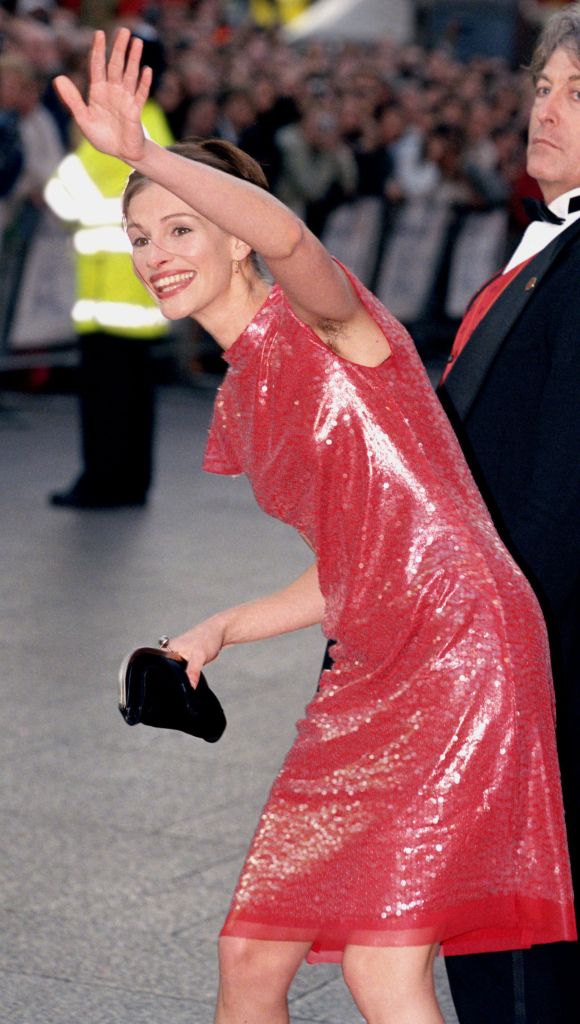
I hope you understood that, as many things, even this issue has been influenced more on what the society decided what was more “appropriate” for women instead of what we considered more comfortable for us. That is why many women, celebrities included have decided to show off more in their social platforms their body hair, to send a precise message: this is part of us! Emily Ratajkpwski (mettere foto) on BAZAAR, Julia Roberts on the red carpet ,Paris Jackson, Amanda Stenberg ,and many more , with their body hair shown on the net wanted to comunicate to the world that we shouldn’t be ashamed of our body hair, that we should feel comfortable with it and to remove it or not has to come from our personal judgement and consideration.


At the same time many movements have started to raise awareness on this topic like “Januhairy“, were women around the world celebrate their body hair, encouraging them to grow for the month of January and shares images of themselves online.
Brands are cottoning too like Nike and No.7 and even a new razor company Billie, where in its ad shows underarm , leg and pubic hair before removed ( and this is something that I have never noticed until now: all razors or shaving product ads always show women using these products with they body hair already removed : what’s the sense of this?lol).
At the end of the day is always about what we want, what we choose to do with our body. I am not here to say you should not shave anymore your body hair or you should continuing do it. We would like to encourage you to choose without considering what other people and what the society believe but on what you believe it is good for your body and your health. Only with awareness and empowerment we can make better decision for ourselves.
Summer is behind the corner and aestheticians are opening soon, are you rushing to remove your body hair or waiting until you want to feel to do it?
Other References:
1. “The Unusual and Deeply Sexist History of Women Removing Their Body Hair” Rachel Lubitz Aug. 12, 2016 (https://www.mic.com/articles/151191/the-unusual-and-deeply-sexist-history-of-women-removing-their-body-hair)
2. https://en.wikipedia.org/wiki/Hair_removal
3.https://en.wikipedia.org/wiki/History_of_removal_of_leg_and_underarm_hair_in_the_United_States
 The Feminist Health CIC