

Growing up as a young African girl, some subjects are off the topic for discussion. Issues related to adolescent girls and women like menstruation, sex, pregnancy seem awkward and not discussed in public. Menstruation was a women-only secret topic and comes with the feeling of shame. Majority of young boys and men have no clue about menstruation and what women go through on a monthly basis. It has been nicknamed as “aunt flow”, “time of the month”, “period”, “code red”, “I’m sick”, “accident” and many more. You have no idea about it until your first period when your mother gives you the pad and tells you how to use it and that’s the end of discussion. Most young girls learn from their peers and there’s often misinformation. The taboo and stigma around this topic makes it difficult for dialogue. It is very important we treat it like every personal hygiene issue or healthcare issue. Diverse cultural and religious views and attitudes towards menstruation give very limited room for education and awareness. Societal actions about this topic have been evident in school educational programs, advertisement, films, activism, and menstrual products. In some cultures, menstruating girls and women are seen as unclean and need to stay away from community activities. It is important to highlight the well-being of girls and women during their period and how boys and men can help. Many girls and women experience poor menstrual hygiene due to stigma, taboos, lack of sanitary products and limited information which had led to the feeling of embarrassment and caused health problems.
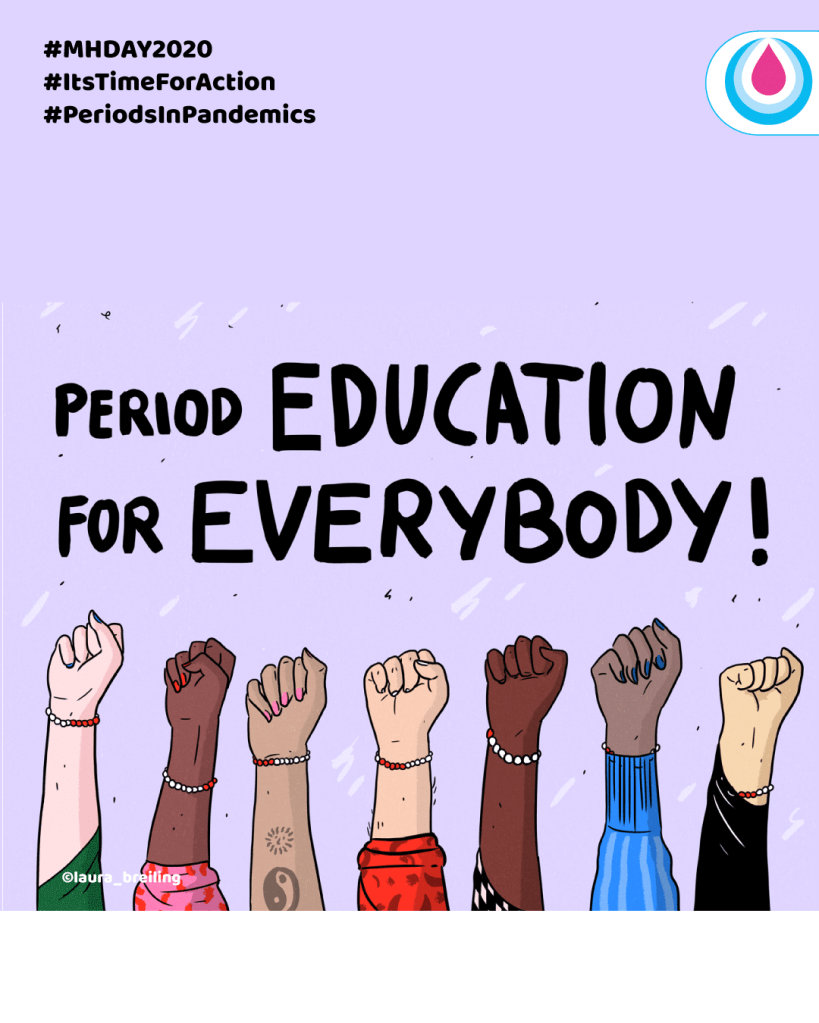
On this day, May 28th, it is marked as “World Hygiene Day” to advocate for the importance of good menstrual hygiene management. Theme for the year is “It’s time for action”. It is also about ensuring women and girls live in an environment that values and supports their ability to manage their menstruation with dignity.

In a study by UNICEF, it was reported that 85% of girls have nothing but a cotton cloth to manage their bleeding and don’t have access to commercial sanitary products. In Africa, 1 out of 10 girls will drop out of school because they cannot afford sanitary towels. Globally, at least 500 million women and girls lack proper access to menstrual hygiene facilities. Several factors influence difficult experiences with menstruation, including inadequate facilities and materials, menstrual pain, fear of disclosure, and inadequate knowledge about the menstrual cycle (World Bank, 2018).
As an adolescent girl you have to figure it all out on your own: what, why, how, and when.
What is Menstrual Hygiene?
Menstrual Hygiene Management (MHM) is defined as:
“Women and adolescent girls are using clean menstrual management materials to absorb or collect blood that can be changed in privacy as often as necessary for the duration of the menstruation period, using soap and water for washing the body as required, and having access to facilities to dispose of used menstrual management materials” (JMP 2012).
Menstrual health and hygiene (MHH) is about access to menstrual hygiene products to absorb or collect menstrual blood, privacy to change the materials, and access to facilities to dispose of used menstrual management materials. It can also include the “broader systemic factors that link menstruation with health, well-being, gender equality, education, equity, empowerment, and rights”.
Why is Menstrual Hygiene important?
Maintaining good menstrual hygiene is important as taking care of your day to day activities. Negligence to menstrual hygiene management can cause harm to the body and pose health risk. Access to menstrual hygiene products and cleanliness can reduce the incident of infections by 97%. These health-related complications have the potential to be serious and could last a lifetime, yet the solution is quite simple. The use of unsafe sanitary products can cause serious infections such as Vaginitis and Toxic Shock Syndrome. Practicing a healthy menstrual hygiene can result in the following:
- Reduced risk of Urinary Tract Infections
- Ensure good reproductive health
- Reduced incidents of painful rashes and yeast infections
- Reduced risk of cervical cancer
- Reduced risk of Hepatitis B infections
- Minimize the susceptibility to getting bacterial sexual transmitted infections such as chlamydia and also virus like HIV
Understanding how periods work and learning to separate the facts about periods from the myths can go a long way in demystifying the topic. Failure to teach an accurate understanding of menstruation to all genders has social implications for gendered relationships and the objectification of women’s bodies. Discomfort arises when both men and women do not have access to the same information; reinforcing the belief “that menstruation is gross and should be kept hidden” . To attain good menstrual health and hygiene, there is the need for community involvement. During this coronavirus pandemic, millions of women across the world are faced with additional challenges with maintaining good menstrual hygiene due to shortage and increased prices of sanitary products, limited access to clean water, worsened stigma which negatively impact girls and women’s menstrual health and hygiene. As we all know “Periods don’t stop for pandemics” said Dana Marlowe, founder and executive director of the nonprofit I Support the Girls, which collects donations of feminine hygiene products and bras for shelters, prisons and people in need, the plea set off alarm bells. Provision of free and tax-free sanitary products in schools, public places and for less-privileged girls and women who can’t afford and shouldn’t be made political.
Organizations contributing to Menstrual Hygiene Management
- Menstrual Health Alliance
- NatraCare
- AFRIpads
- Sustainable Health Enterprises (SHE)
- DaysForGirls
- Period
- WASH United
- Clue/International Women’s Health Coalition
Learning and knowing about all these is like passing the torch and if theirs (adolescents) aren’t lit soon, they may lose their way concerning these issues.
 The Feminist Health CIC