
WELCOME TO THE WOMEN BOOK CLUB
Meeting women in literature that empower other women
For book lovers, reading is not the simple act of learning and introducing words in your brain, but reading is essential for living, like oxygen for breathing, necessary for everyday activity, and for our personal mental stability.
This year, more than ever with the COVID emergency, people found peace and recover in books, from just wasting time to really care about themselves.
So as we believe in the power and the importance of the words, we wanted to dedicate a space to the amazing world of literature, especially to female literature authors and enthusiasts. In particular we want to give space to women that brought hope, power and strength to other women through their words. This is why , when I thought about this article, Giulia Paganelli (known as @librificio on Instagram ), books lover and reading craver, came immediately on my mind to talk about women writers that inspires her and can inspire all of us. At the same time Giulia introduced me to another amazing person, Giulia Zavagna, editor and book translator, giving us the possibility to discover a new world and a different point of view of the literature.
So take a sit, grab your cup of tea or coffee, a glass of wine if you are reading this during the happy hour and, let us introduce to you these amazing empowering women.
The Feminist Health Blog and Giulia Paganelli
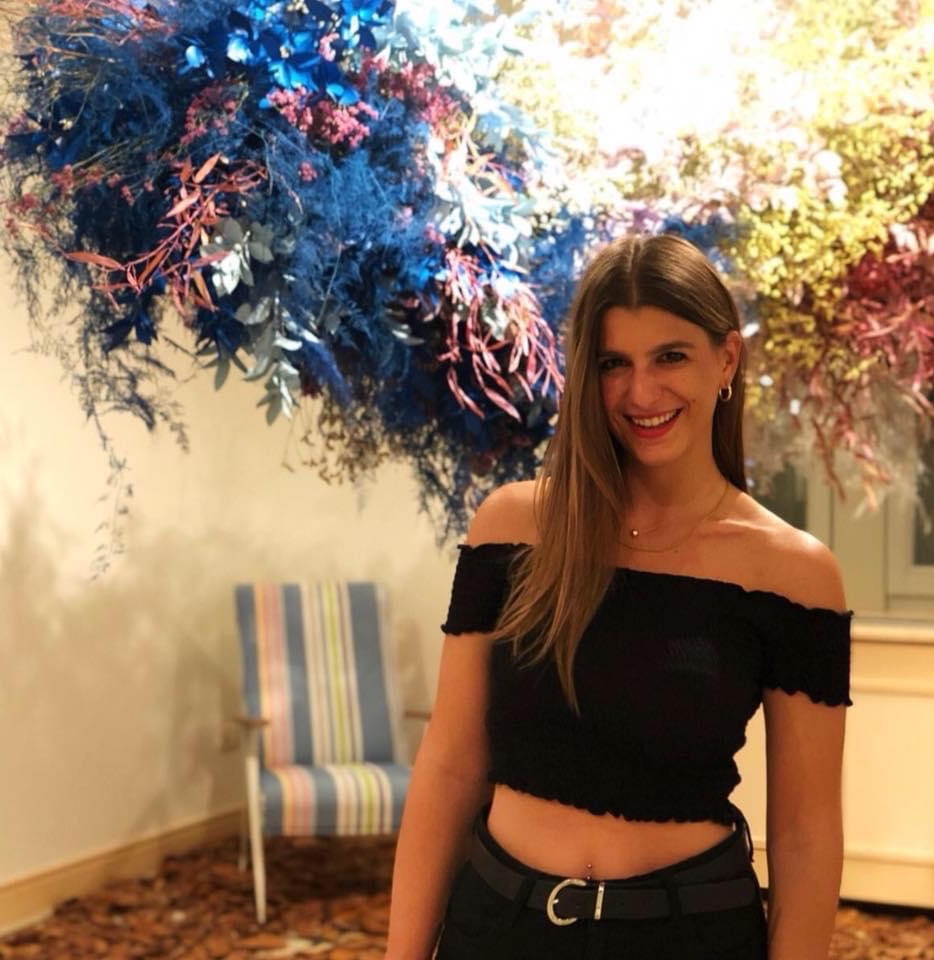
TFHB: Ciao Giulia! Thanks for accepting our invitation and share with us your knowledge and passion! For starting, can you tell us a bit about you?
G.P. : Thanks to your invitation! I really like the project and I believe there is the need of this kind of spaces, so I am so happy to talk with you here about one of my biggest love!
I was born in Rimini, close to the sea, and lived in different Italian cities. I followed my passion and studied Philosophy, which was fundamental for my growth – and happiness! I have always loved reading, since the very beginning: books have always been my best allies. I’m always looking for new authors, always studying or always lost in one story. I absolutely love travelling, visiting the country I’ve red about and meeting new people. With a dear friend, Maddalena, I created a podcast to talk about literature, it’s called PourParler (https://www.spreaker.com/show/pour-parler) and it’s available on Spreaker. PourParler Podcast is a self-produced cultural project, a literature podcast in which we review the books we have read, and in which we dedicate spaces for in-depth study to the great authors of Italian literature.
TFHB: That’s sounds so cool! I invite you all to follow this podcast! A curiosity: considering your followers on your Instagram, could you see a difference on what men and women read?
G.P.:My fanbase is mostly women, although I have interaction with both male and female readers because the readings are very similar – on my profile I focus on specific types of literature (eg Latin American literature) so my followers come back to me to know more and discuss about what I share daily, despite their gender.
TFHB: I see! Both Eunice and I, believe that reading it is something essential for our life, as breathing, eating and walking. And I know is the same for you and that is why when I was thinking about this episode you immediately came on my mind. Furthermore I believe that reading could be compared and considered as a therapy, especially during this COVID time where we were forced to stay at home and focused on ourselves. Do you agree?
G.P.: Absolutely, I have always seen reading as a time of reflection. Books are like mirrors to me: reading creates a moment of self-reflection through fiction. They have helped me so many times, reading about other places/situations really gives a wider perspective on things.
TFHB: One fundamental thing about the Feminist Health Blog is that we believe that we can improve women health through women empowerment. And women can get empowerment in many ways, as reading. That is why, I invited Giulia to give to our female followers some therapy-reading, written by women and even for women. So Giulia, where we would like to start??
THE INHABITED WOMAN – GIOCONDA BELLI
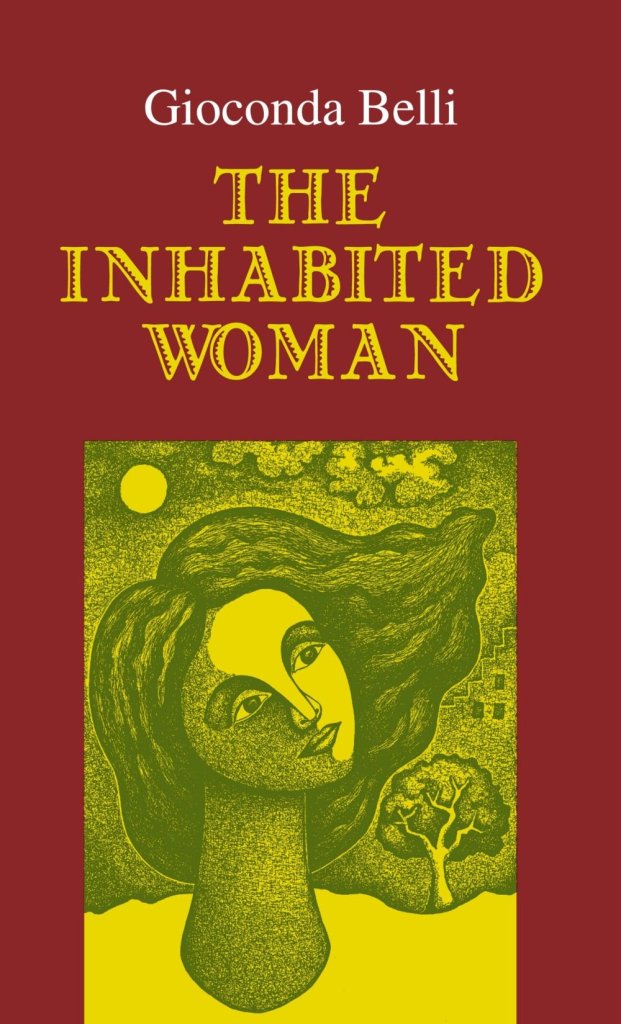
The inhabited woman contains many social and political criticisms, talking about the female revolt – in which the woman, who has always been a victim of male domination, rebels and actively participates in the creation of events that will then transform the reality. Gioconda Belli in fact believes in the figure of a new woman, not subjected to the male perspective – an emancipated woman, who rewrites her relationship with society. With these arguments in mind, Belli constructs the plot of a novel that tells two parallel stories that apparently have nothing in common except that their protagonists are, in both cases, women and in both cases, female fighters, women in search of freedom. The search for freedom is the common thread that guides both stories, of Lavinia and of Itzá.
Itzá is an indigenous woman who lived in the period of the conquest by the Spaniards and who was one of the first women to take an active part in the fight against the invaders. His voice is represented by a tree-shaped spirit, which begins by telling us his story as if he was an observer who witnessed the events but did not participate. Later, Itzá reaches a sort of symbiosis with Lavinia, thus influencing her behavior in an extraordinary way.
We come therefore to Lavinia, a young architect from a bourgeois family who lived in the 70s, under a ferocious dictatorship. Lavinia is involved in the National Liberation Movement almost by chance, without a previously developed will: one day her boyfriend appears at her house, with him there is a wounded militant – Lavinia initially refuses violence, but, after a period of doubts and uncertainties, ends up joining the armed struggle against the dictatorship.
Another important theme of this book is love and its strength: Gioconda Belli shows us loves that are never perfect but are real, lived to the full, and this is also the mirror of the relationships lived in her life.
THE THING AROUND YOUR NECK – CHIMAMANDA NGOZI ADICHIE
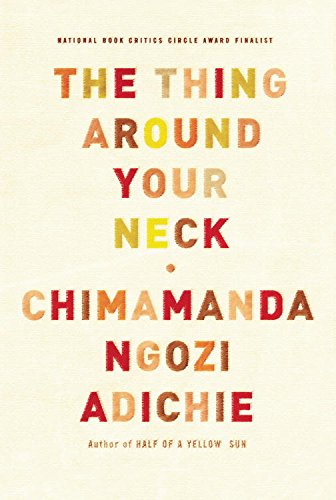
Thinking of inspirational women, Chimamanda Ngozi Adichie immediately comes to my mind: in addition to being a wonderful writer, she is a woman who I admire and respect very much.
She was born in Nigeria in 1977 and began studying medicine there, and after just over a year she left and moved to the United States to pursue her passion, writing. It is precisely in the United States that she begins a reflection that will accompany her in all the following years, a reflection on gender and race. Over the years she has given us wonderful novels, such as the most famous Half of a Yellow Sun but also amazing speeches and short stories.
This work is a collection of short stories that I would like to recommend today, because unlike her other works this one is less known – at least in Italy.
It is called “That thing around your neck” and contains twelve stories, almost all with female protagonists who live between Nigeria and the United States and who find themselves facing situations that are rather painful for them. Some are trapped in a violent reality, others struggle to integrate into new lives – these women who move, change country, always find themselves a little lost, and end up not feeling at home on either side.
They are all melancholy stories, of disillusionment, of struggles to make one’s voice heard.
As for her other works, Adichie manages very well to make history coexist with private stories, giving us an incredible affresco of real lives that make us open our eyes to so many injustices that we, so concentrated in our daily lives, often ignore. A great gift that her stories leave us is seeing and understanding precisely diversity, access to a world that may seem far away, a privileged point of view to understand the uniqueness of each of us.
WOMAN HOLLERING CREEK AND OTHER STORIES – SANDRA CISNEROS
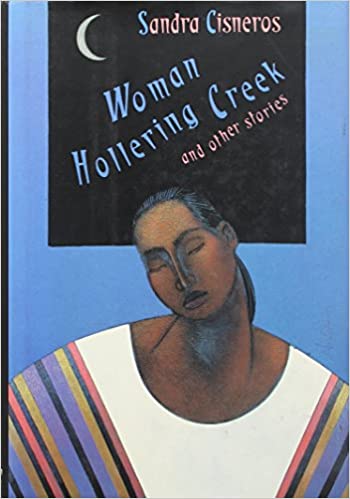
Sandra Cisneros, writer and poet, was born in Chicago from Mexican parents, and during her childhood she moved often between Mexico and the United States: this caused her a sense of disorientation because she does not feel that she belongs fully to either of the two cultures. We find this sensation in many of her works, in which she speaks of the difficulties of living in a country where she doesn’t feel right, and also of the role of women in Latin American culture.
This is a collection of stories, some longer and others of a page or two, precious windows of overlooking snapshots of life. In these pages, we find various themes such as the celebration of one’s own culture, oppression, man-woman power relations; Cisneros gives a voice to women usually reduced to silence, women who fight for their lives, giving us unforgettable characters. The stories of her protagonists who live in the border town between Mexico and Texas are so real, full of disenchantment but also passion, love and sometimes too close family ties and her writing is really powerful – the sounds and colors, the images that come to life, the dull pain that goes straight to the stomach.
I loved the coexistence of English and Spanish, the courage to leave some significant words without translation. My favorite stories are “Never Marry a Mexican” and “Eyes of Zapata” (this really broke my heart). “Woman hollering creek” is also very beautiful, which in the English edition is also the title of the collection.
SULA – TONI MORRISON
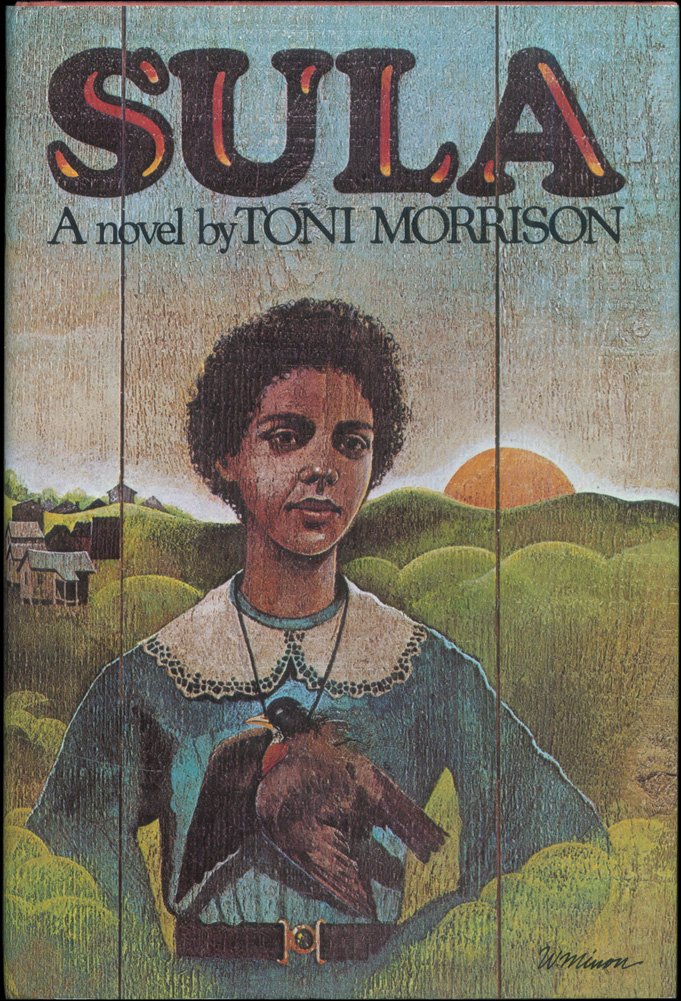
Toni Morrison needs no introduction: a woman who has given us such precious and extremely actual words, her teachings continue to be fundamental to each of us and her fight against prejudice and social injustice still strongly resonates.
In Morrison’s works there are some fundamental themes, such as her African American identity and the fight against racism, the value and importance of the community, the fight against the dominant white and patriarchal culture. Women are the undisputed protagonists of her novels: strong women, struggling with oppression but who never stop fighting to change things, incredible women who not only forge relationships of love but also very strong friendships, women-mothers, women that grow and pursue their independence and autonomy.
I would like to tell you about one of these women, protagonist of the novel of the same name Sula.
Sula embodies freedom, adventure, passion – she is impetuous, dangerous, she never fully understands the echo of her actions on others. She is never conventional, she does not bend under the expectations of society, she is proud and manages to create a life outside the sexist and racist schemes of the world in which she lives.
This little gem tells not only about this unique woman, but also about the truest and most solid relationship of her life, the one with Nel, the friend in whom she reflects and recognizes herself despite all the differences. Their relationship will change drastically, from inseparable friends they turn into terrible enemies when Nel, now a victim of the conventional mentality, cannot forgive a betrayal.
This book has given me lots of food for thoughts: how do we determine ourselves in the society in which we live? Is it more important to be free or accepted? What does really bind us to other people? Is the life we live really what we want or do we adapt for comfort, slaves to a shared mentality?
It is not easy to find the answers to this type of questions, and the role of great literature is also this, to make us uncomfortable, to make us think, to inspire us.
One more book
This book unfortunately has not been translated in English yet – the only existing translation is an italian one, and thanks to the great work of Giulia Zavagna we can read Vera Giaconi’s powerful stories.
SERES QUERIDOS – VERA GIACONI
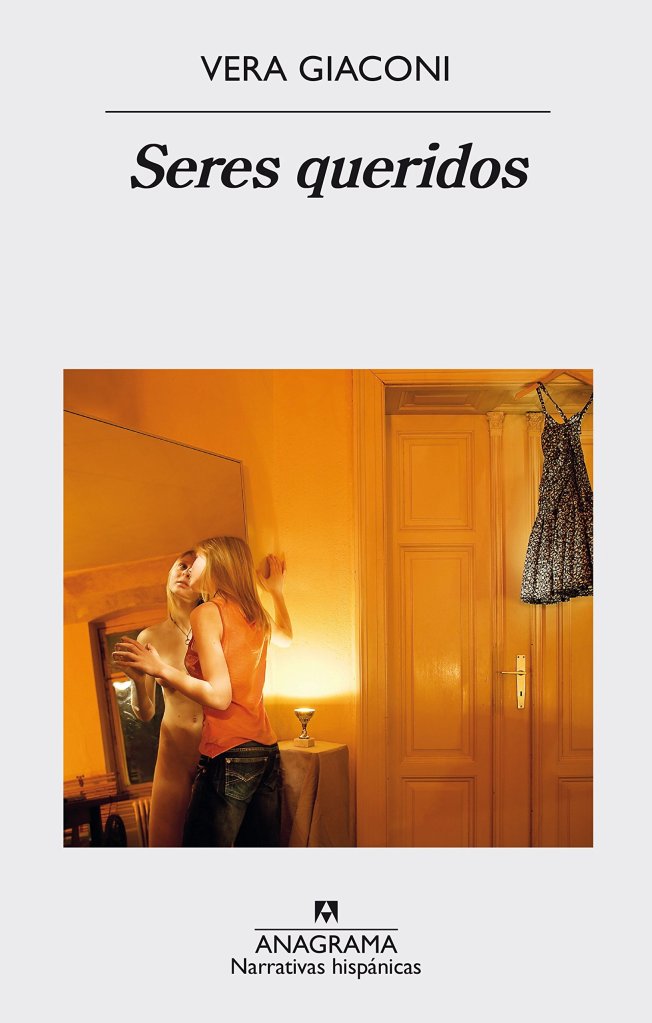
This is a collection of stories as well, and here Giaconi’s gaze investigates the bonds with the people closest to us, whether they are family, love or friendship, those bonds in which one should feel protected but sometimes the pain come precisely from those who share daily reality with us.
“When good things happened to my sister, I was happy. I was very happy indeed. But when that good news for some reason stopped or backfired, I was happy anyway. And I was ashamed of it”.
We know dysfunctional families, love relationships and even unresolved connections between friends; what we immediately understand is that nothing is as it initially seems, and behind a crooked smile or a fleeting glance you can hide a spectrum of complex feelings such as love but also hate, which coexist in every relationship.
Giaconi puts us in front of the reality of affections that are never as we really want them to be, they are often painful and make us feel ashamed: we strongly identify with those characters, even when we would not like to.
The Feminist Health Blog with Giulia Zavagna
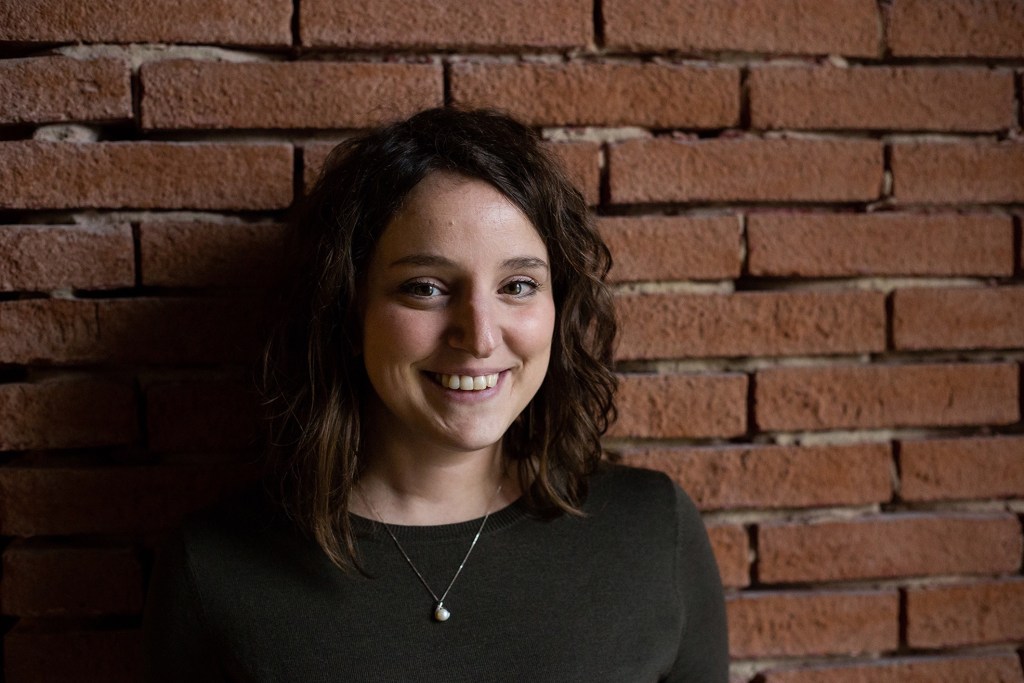
TFHB: Hi Giulia, thanks for be here talking with us about you and your work that I am sure many don’t know about, myself included and can’t wait to hear from you. Can you introduce yourself and tell us a bit of your education and career?
G.Z :Hi Ifeoma, thanks to you and Giulia for having me involved in this project, which seems very interesting . My name is Giulia Zavagna, and I have been working in publishing for years: first as a freelance, collaborating with various editorial realities and services, and for some years alternating literary translation with work as editor in an independent publishing house in Rome, SUR Editions. In both cases, I mainly deal with fiction translating from Spanish, with a focus on Latin America.
TFHB: I was amazed when Giulia told me about you, and your work. I think the work of the translator is underestimate, mainly because you are not on the spotlight. How did you approach in this world? How did you start?
G.Z.: My path is quite standard: I studied languages and translation at the University of Genoa and, after a very first translation experience for a small publisher found in the maze of the academy, I found myself with a great desire to deepen a world, that of books, which I realized I didn’t know at all. I then moved to Rome to attend a publishing course ,”Il lavoro editoriale” (“The editorial work”), at the Scuola del Libro ( School of book), which has definitely convinced me to continue on that path. After an internship at the Minimum Fax Publishing House, the first editorial collaborations arrived, and so, little by little, I started. Today I think I can say that my experience as an editor enriches my point of view as a translator and vice versa, which is why I try to pursue both paths, beyond the obvious prospect of not being able to live by translation alone.
As for not being in the spotlight as a category, I am personally happy to be far from it, but I believe in recent years some steps have been taken in this direction: the space dedicated to translators and the opportunities for comparison are increasing, both in fairs and in less specialized contexts. Of course, an adjustment of fares would also favour greater professionalism, but let’s not open this Pandora’s box …
TFHB: I think, especially for novels, the role of the translator is fundamental to be able not only to translate words by words, but even the feelings and the emotions the writer want to express in those lines. Choosing the right words in the right way I believe it’s not easy. Am I right?
G.Z. : No, obviously finding the right words is not easy at all, and often the final version is the result of a very long and complex work, which starts with the reading and develops in later drafts and reinterpretation, which gradually move away from the original language to approach and consolidate in the target language.
The level of difficulty, however, varies greatly from book to book. I have the feeling that the more the author is aware of his writing, the more the text is able to offer the translator the right grip, even in the case of the most refined prose. Often it is the less elaborate book from the point of view of style that pose the greatest obstacles to the translator, at least in my experience.
In any case, it seems to me mostly a work of reading and interpretation and, this is why I like to compare myself with the authors whenever I can. I usually do it when the translation is almost completed, in order to have an overview as comprehensive as possible of the entire text in its various aspects.
TFHB: What was the first book you translated and how your relationship with translation and translation techniques has changed since then?
The first book I translated was not even a whole book: it was in fact the novel co-translation, with Luis Dapelo, of “Yo nunca te prometí la eternidad ”, by the Argentine author Tununa Mercado, released in 2011 for the Poiesis publisher. It is an exciting story of exile, set between Europe and Mexico during the Second World War. I remember it as a very intense and exciting experience, even if I tremble not a little at the idea of reopening that book today.
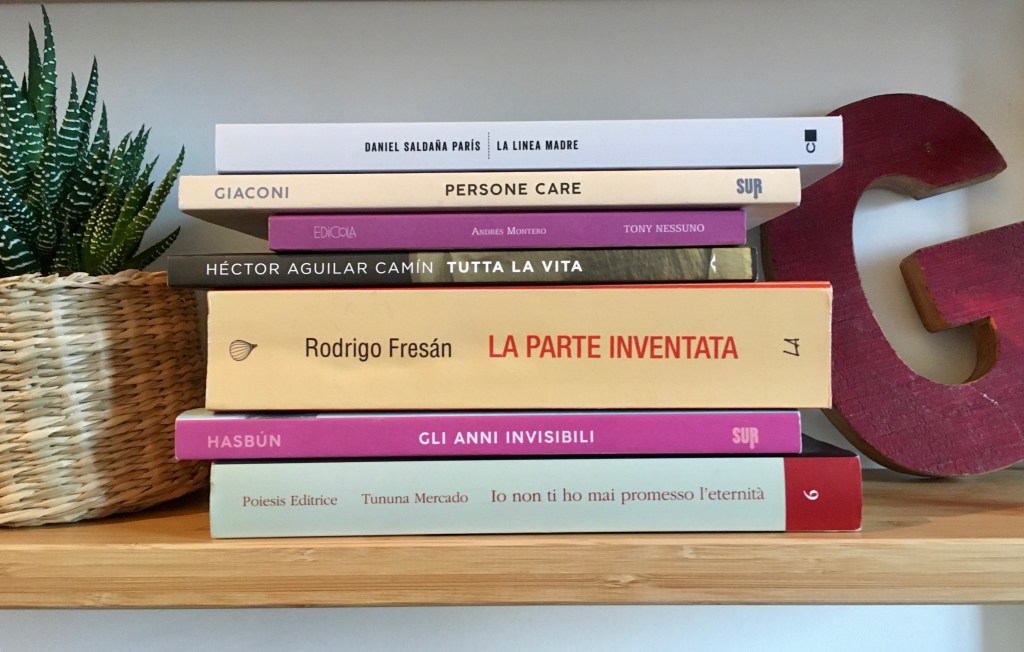
In general, I try to update myself as much as possible by attending seminars and workshops for professionals; however I believe that this profession is learned and refined mostly with practice. I am therefore sure that my approach to the text has changed from the first book to today, and I am equally certain that I still have a lot to learn.
Since then, my understanding of the language has undoubtedly changed, enriched by the daily contact I maintain with Latin America; my knowledge of the countries that makes up the mosaic of the Spanish language has changed, a fundamental element for that interpretation we were talking about; my way of reading has changed, thanks to the proximity of splendid colleagues, and thanks to the work done on the translations of others; my Italian has also changed, I guess, which is now made up of many more voices, many more registers, many more authors (and translators) in the ear.
TFHB: Have you ever thought about trying writing yourself a book?
No, and I don’t think I’ll ever want to do that. I’ve always been on the other side of the fence, the reader’s side. After all, translation is perhaps the most in-depth type of reading
TFHB: Which are the parts in the translation of a novel that you like more and the ones that you find more difficult and/or boring?
G.Z.: I really like to translate the first chapters of a new book, that moment when you gradually get used to a new context, a new narrator voice, a new rhythm. The hours I spend getting into the book for the first time are the ones I love the most. I like to dive in and move on until I feel like I’ve taken the right measures, maybe I’ve tuned in to the right tone. It is the phase practically opposite to that of the revision and the successive reinterpretations, that I also love a lot, but with which I find myself fighting more and more: I find myself more and more frequently chasing the feeling of completeness that gives you a text ready for delivery. Often, if I could, I would never put the final point, I would instead continue to file, reread and review continuously.
TFHB: What made you decide to translate only from Spanish and not even from another language? Do you have any particular connection with this language?
G.Z.: I am an Hispanic by training, but I have had a very natural predilection for Spanish since I started studying it in high school. Predilection that became absolute when I approached the Latin American variants: it is a language that encloses such stratification, contamination and complexity – in spite of its apparent closeness to Italian – that it could be explored forever.
At the same time, there are at the base of this choice cultural and literary affinities that have pushed me to continue working more and more in that direction, gradually developing the linguistic sensitivity needed to translate. It doesn’t seem obvious to me that this happens with several languages: I translated for a few years also from English, a language with which I work every day, but then I preferred to concentrate on a single linguistic and cultural universe.
TFHB: For those that maybe are curious about this work and would like to know more about and enter in this world, do you have any advice for them?
G.Z.: When they ask me how to move the first steps as an aspiring translator, I always say two things, that after a long time continue to seem to me fundamental. First: I think it is important to read, read a lot, everything possible (from Dostoevskij to advertising flyers, everything is language, everything is needed). Above all I believe that translating means knowing how to read the right way, and getting used to rereading a lot until dissecting the text in all its aspects. I have seen people approaching this profession who do not like reading or simply do not have a habit of reading – even just as curiosity – and I admit that the thing seems difficult to reconcile with the profession of the translator. Secondly, I think it is essential to have a knowledge of the dynamics of publishing,in order to understand the course that texts take before and after their passage in another language,, throughout the chain, and to mature an orientation in a world that otherwise risks appearing very closed.
 The Feminist Health CIC