
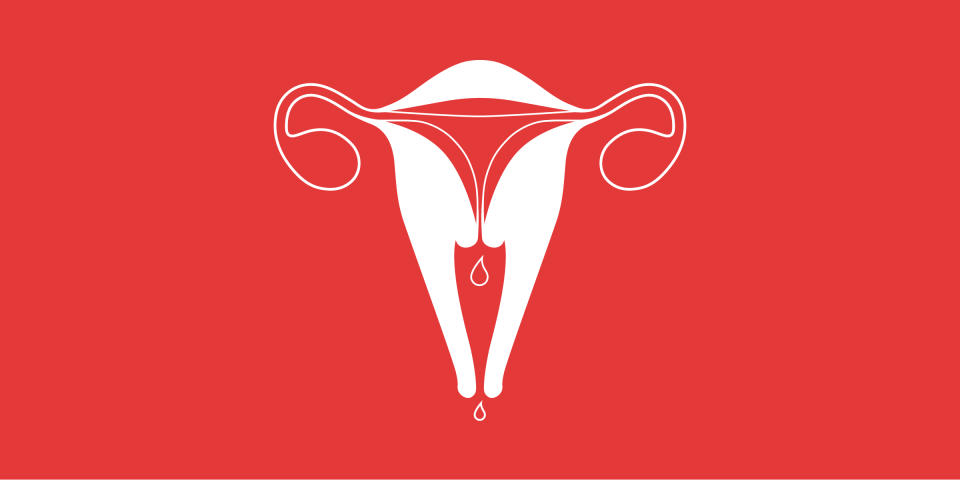
Menstruation (also known as period and many other colloquial terms) is the regular discharge of blood and mucosal tissue from the uterus through the vagina. The menstrual cycle is characterized by the rise and fall of hormones, particularly estrogens and progesterone. Menstruation is triggered by falling of the progesterone levels and is a sign that pregnancy has not occurred.
Our first ever period is called menarche and usually begins between the ages of 12 and 15 but can start at young age as 8 years old [2]. The average age of the first period is generally start late in the developing world, and earlier in the developed world[3]. The typical length of time between the first day of one period and the first day of the next is 21 to 45 days in young women. Bleeding usually lasts around 2 to 7 days. Periods stop during pregnancy and typically do not resume during the initial months of breastfeeding[2]. Menstruation stops definitely occurring after menopause, which usually occurs between 45 and 55 years of age[4].
About 80% of women do not encounter problems either during menstruation or in the days leading up to menstruation, but in other cases women have symptoms before their period that interfere with their normal life, called premenstrual syndrome (PMS). About 20 to 30% of women experience PMS and with 3% to 8% experiencing severe symptoms [5] including acne, tender breasts, bloating, tiredness, irritability, and mood changes [6]. Other symptoms are pain, heavy or abnormal bleeding during menstruation.
To better understand the menstruation phenomenon it is important to give a small insight about the different type of cycles that exist.
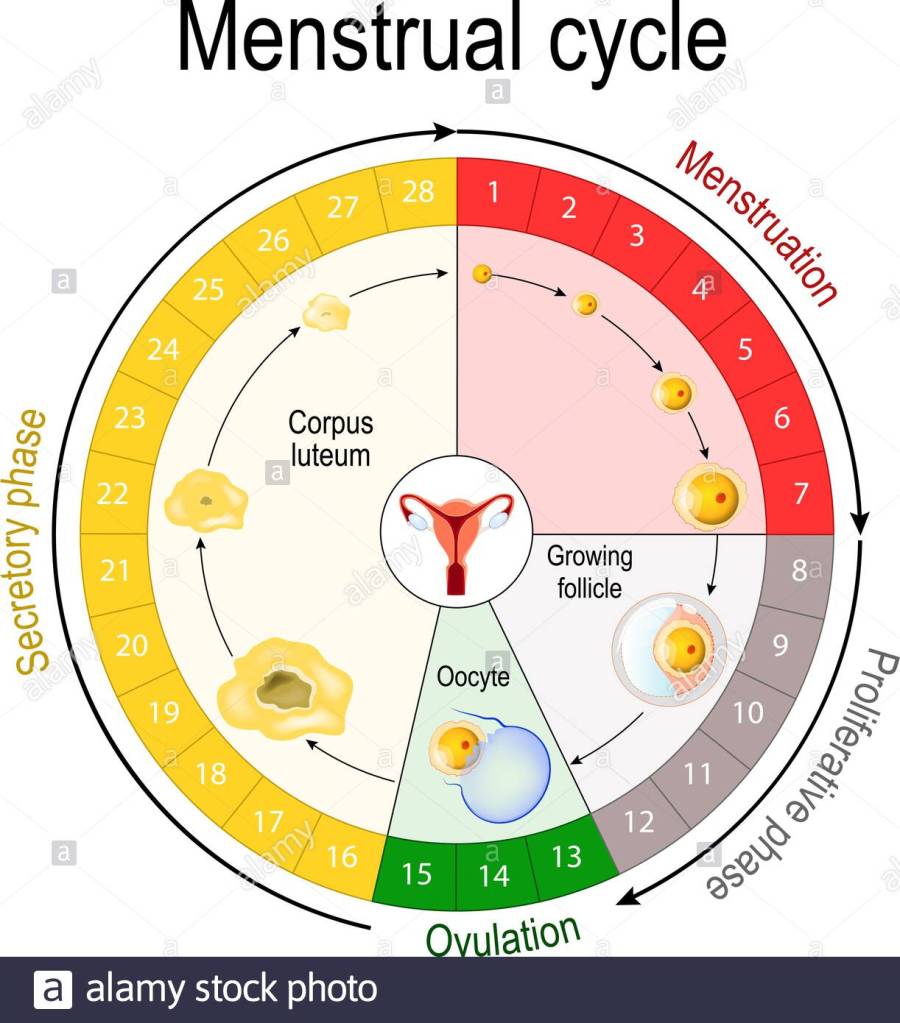
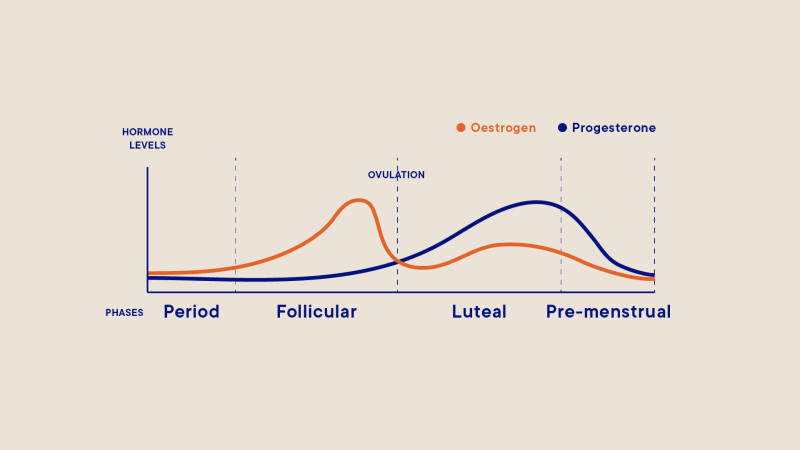
The menstrual cycle encompasses the ovarian and uterine cycles. The menstrual cycle is controlled by the hypothalamus and the pituitary gland in the brain, that produce different types of hormones (GnRH, FSH, LH) that influence the reproductive hormones to produce estrogens and progesterone.
The ovarian cycle describes changes that occur in the follicles (bags full of liquid that are found inside the ovaries of a woman) that they secrete different type of hormone of the ovary,[7] whereas the uterine cycle describes changes in the endometrial lining (uterus tissue) of the uterus to receive a fertilized egg . Both cycles can be divided into phases: the ovarian cycle consists of the follicular phase, ovulation, and the luteal phase; the uterine cycle consists of menstruation, the proliferative phase, and the secretory phase. Day one of the menstrual cycle is the first day of the period, which lasts for about 5-7 days. The cyclical rise and fall of the follicle stimulating hormone (FSH) prompts the production and growth of oocytes (immature egg cells) and around day fourteen, an egg is usually released from the ovary (ovulation). The fallopian tubes must capture the egg and provide the place for fertilization. The hormone estrogen stimulates the uterus lining to thicken and accommodate an embryo if fertilization occurs. If it doesn’t, the falling level of progesterone trigger the lining to break down and blood is released (menstruation), that is a sign that pregnancy has not occurred.
Why we should be more concerned about menstruation?
The menstrual cycle can cause some women to experience problems that disrupt their daily lives. These can include cramps, tender breasts, tiredness, and premenstrual syndrome. More severe problems such as premenstrual dysphoric disorder are experienced by 3–8% of women. Debilitating period pain is not normal and can be a sign of something severe such as endometriosis [8]. Even when normal, the changes in hormone levels during the menstrual cycle can increase the incidence of disorders such as autoimmune diseases [9], which might be caused by estrogen enhancement of the immune system[10].
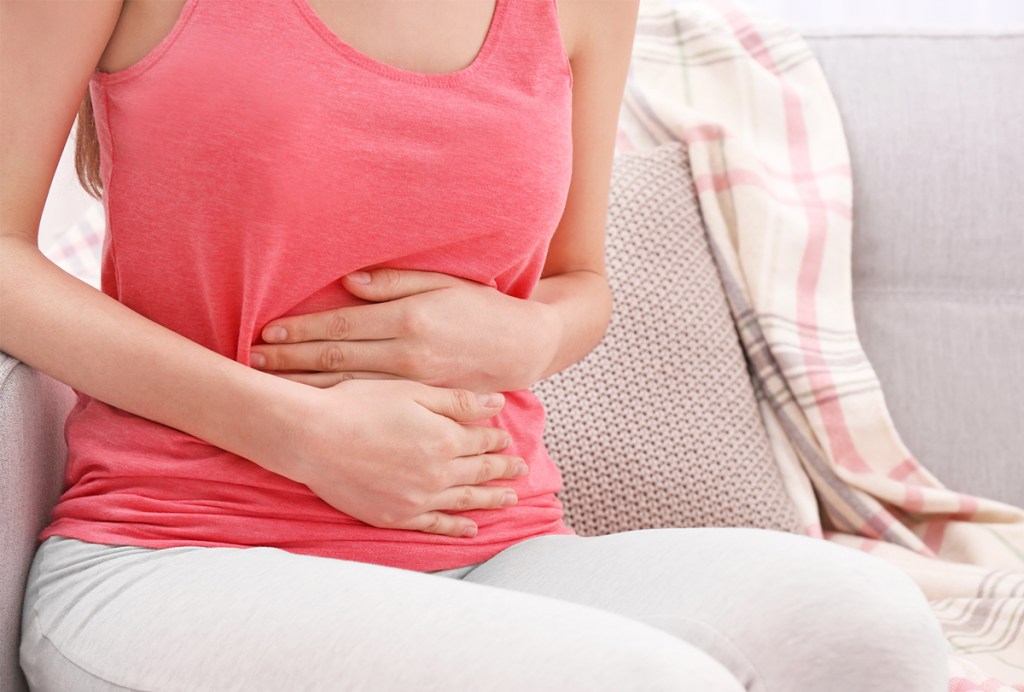
These issues can significantly affect a woman’s health and quality of life and timely interventions can improve the lives of these women [11]
On the other hand there are common culturally communicated misbeliefs on how the menstruation affect the woman basic life activities and psychology condition as changing of the mood, setting in of depression , irritability. Often a woman’s normal mood variation is falsely attributed to the menstrual cycle. Furthermore, period is often associated with pain, shameful or unclean experience. Much of the research is limited, and the problem is that there is not a measurable change in the mood directly associable with the woman period . Still, we can detect psychological fluctuations, and systemic physiologic effects on the brain, metabolism and musculoskeletal system.
Every woman have different physical and mental experiences during their period and to generalize this condition is a huge mistake that society often does. On the other hand, we should start to talk more about it and understand the different type of condition that woman can undergo during this period of the month in order to really help women and girls in the best way. One of the first thing to do, is to remove the taboo around this topic and freely speaking about something so natural that happens in our body.

References
- Women’s Gynecologic Health. Jones & Bartlett Publishers. 2011. p. 94. ISBN 9780763756376. Archived from the original on 26 June 2015.
- “Menstruation and the menstrual cycle fact sheet”. Office of Women’s Health. 23 December 2014. Archived from the original on 26 June 2015. Retrieved 25 June 2015.
- Diaz A, Laufer MR, Breech LL, American Academy of Pediatrics Committee on Adolescence, American College of Obstetricians and Gynecologists Committee on Adolescent Health (November 2006). “Menstruation in girls and adolescents: using the menstrual cycle as a vital sign”. Pediatrics. 118 (5): 2245–50. doi:10.1542/peds.2006-2481. PMID 17079600.
- Menopause: Overview”. nichd.nih.gov. 28 June 2013. Archived from the original on 2 April 2015. Retrieved 8 March 2015.
- Biggs WS, Demuth RH (October 2011). “Premenstrual syndrome and premenstrual dysphoric disorder”. American Family Physician. 84 (8): 918–24. PMID 22010771.
- Premenstrual syndrome (PMS) fact sheet”. Office on Women’s Health. 23 December 2014. Archived from the original on 28 June 2015. Retrieved 23 June 2015.
- Richards JS (2018). “The ovarian cycle”. Vitamins and Hormones (Review). 107: 1–25. doi:10.1016/bs.vh.2018.01.009. ISBN 978-0-128-14359-9. PMID 29544627.
- Maddern J, Grundy L, Castro J, Brierley SM (2020). “Pain in endometriosis”. Frontiers in Cellular Neuroscience. 14: 590823. doi:10.3389/fncel.2020.590823. PMC 7573391. PMID 33132854.
- Talsania M, Scofield RH (May 2017). “Menopause and rheumatic disease”. Rheumatic Diseases Clinics of North America (Review). 43 (2): 287–302. doi:10.1016/j.rdc.2016.12.011. PMC 5385852. PMID 28390570.
- Reed BF, Carr BR, Feingold KR, et al. (2018). “The Normal Menstrual Cycle and the Control of Ovulation”. Endotext (Review). PMID 25905282. Archived from the original on 28 May 2021. Retrieved 8 January 2021.
- Matteson KA, Zaluski KM (September 2019). “Menstrual health as a part of preventive health care”. Obstetrics and Gynecology Clinics of North America (Review). 46 (3): 441–53. doi:10.1016/j.ogc.2019.04.004. PMID 31378287.
 The Feminist Health CIC