

There’s no single test to show you have Polycystic ovary syndrome (PCOS). But the signs and symptoms you communicate with your doctor may help in diagnosing PCOS. The symptoms may be unclear or mimic the symptoms of other conditions which it may be difficult to detect and often confusing. In most cases, your doctor will conduct physical exams, ultrasound and blood tests will help diagnosis PCOS. About 4% to 12% of women within their reproductive age are affected with Polycystic ovary syndrome.
What is Polycystic ovary syndrome (PCOS)?
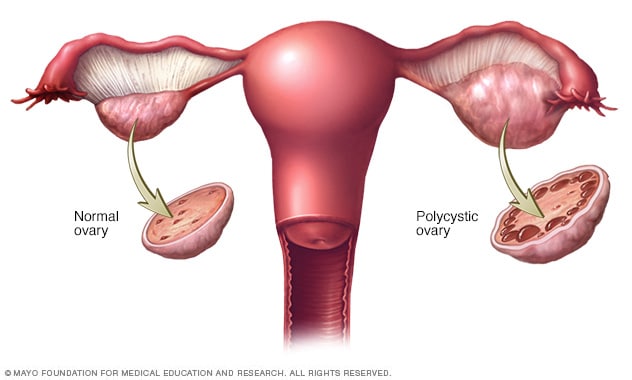
Polycystic ovary syndrome (PCOS) is a health condition caused by imbalance of the reproductive hormones that can affect your period, fertility, weight and skin. It happens among women which creates problems in their ovaries. Polycystic ovary syndrome (PCOS) occurs when small cysts grow in the ovaries which may not be harmful but leads to hormonal imbalances. PCOS may cause unwanted changes in your body including irregular periods, acne, excess hair growth and/or infertility. If left untreated for a long time, PCOS can lead to a serious health problems like type 2 diabetes and heart diseases.
“About 1 in every 10 women of reproductive age are affected by PCOS.”
“Although PCOS can’t be cured, but early diagnosis and treatment can help manage the symptoms and prevent long-term health problems.”
Causes: How does PCOS happen?
PCOS can be confusing and controversial in explaining or understanding how it happens. The exact causes of PCOS are unknown, but often happens when one hormone gets out of balance and triggers another to change. The sex hormones get out of balance. Normally, the ovaries make a tiny amount of male sex hormones (androgens). In PCOS, they start making slightly more androgens. This may cause you to stop ovulating, get acne, and grow extra facial and body hair.
The body may have a problem using insulin, called insulin resistance. When the body doesn’t use insulin well, blood sugar levels go up. Over time, this increases your chance of getting diabetes. Obesity can also increase insulin levels and make PCOS symptoms worse. Lifestyle can have a big impact on insulin resistance, especially if a woman is overweight because of an unhealthy diet and lack of physical activity.
Genes may be the reason you develop PCOS. It is hereditary, so your chance of having will be higher if other women, sister or daughter in your family had it or the symptoms of PCOS such as diabetes, irregular menstrual cycle. A research study at University of Alabama discovered that 24% of women with polycystic ovary syndrome had a mother with PCOS and 32% of the women had a sister with the condition.
Symptoms: How do you know you PCOS?
Sometimes signs and symptoms can be unclear and less obvious. Women develop symptoms at the first of their menstrual period and sometimes later in life. Most women realize they have PCOS when they have difficulty getting pregnant or gaining more weight or hair growth in unusual parts of the body. Here are some symptoms you may experience:
Irregular menstrual cycle: Some women with PCOS get fewer than eight periods a year or none at all. The uterine lining builds up for a longer period of time, so the periods you do get can be heavier than normal.
Hair growth: Women with PCOS get excess hair growth called hirsutism. More than 70 percent of women with this condition grow hair on their face and body — including on their back, belly, and chest.
Acne: Male hormones can make the skin oilier than usual and cause breakouts on areas like the face, chest, and upper back.
Weight gain: Women with PCOS gain weight faster and difficulty losing weight.
Baldness: There is hair loss or thinning of hair on the scalp like the male pattern baldness.
Dark patches of skin can form in body creases like those on the neck, in the groin, and under the breasts.
Headaches: Hormone changes can trigger headaches in some women.
Skin tags: It is small excess flaps of skin in the armpits or neck area.
How PCOS affects your Body
Women with PCOS can develop serious health that can affect their daily lives.
Diabetes (High blood sugar): more than half of women with PCOS develop type 2 diabetes by age 40.
Hypertension (high blood pressure): When it goes undetected for a long time it can damage the heart, brain, and kidneys.
Gestational diabetes: Women with PCOS can diabetes when pregnant which puts the pregnancy and baby at risk and can lead to type 2 diabetes later in life for both mother and child.
Heart disease: Women with PCOS are at higher risk, and risk increases with age
High LDL (“bad”) cholesterol and low HDL (“good”) cholesterol increases the risk for heart disease
Sleep apnea is a disorder that causes breathing to stop during sleep and raises the risk for heart disease and type 2 diabetes
Stroke: cholesterol and white blood cells clogging blood vessels can lead to blood clots that in turn can cause a stroke.
Depression and anxiety can occur for people with PCOS. Both hormonal changes and symptoms like unwanted hair growth can negatively affect your emotions.
Infertility: To get pregnant, you have to ovulate. Women who don’t ovulate regularly don’t release as many eggs to be fertilized. PCOS is one of the leading causes of infertility in women
Endometrial cancer: During ovulation, the uterine lining sheds. If you don’t ovulate every month, the lining can build up. A thickened uterine lining can increase your risk for endometrial cancer.
How PCOS is Diagnosed
For a woman to determine if she has PCOS, the signs and symptoms will have to be checked. Doctors diagnose PCOS from 2 of the 3 symptoms listed below;
- High androgen levels – Higher than normal levels of male hormones that may result in excess hair on the face and body, acne, or thinning scalp hair
- Irregular menstrual cycles – Irregular periods or no periods, caused from lack of ovulation
- Ovarian cysts – multiple cysts in the ovaries but not all women with PCOS have it.
Your doctor may talk to you about your medical history and do a physical exam and different tests:
- Pelvic exam – Your doctor will check for growth or swollen in the ovaries or uterus and also signs of extra male hormone.
- Physical exam – Your doctor will measure your blood pressure, body mass index (BMI), and waist size. They will also look at your skin for extra hair on your face, chest or back, acne, or skin discoloration. Your doctor may look for any hair loss or signs of other health conditions such as an enlarged thyroid gland.
- Ultrasound (Sonogram): a test which uses sound waves to look for abnormal follicles and other problems with your ovaries and uterus.
Lifestyle tips to manage/treat PCOS
You can take some steps in your daily life to improve your health and treat PCOS with the help of your doctor’s prescriptions.
Losing weight can help regulate your menstrual cycle and improve PCOS symptoms. Weight loss can also help improve cholesterol levels, lower insulin and reduce heart disease and diabetes risks.
Good diet: Studies comparing diets for PCOS have found that low carbohydrate diets are effective for both weight loss and lowering insulin levels.
Exercise: Studies have found that 30 minutes of moderate-intensity exercise at least 3 days a week can help women with PCOS lose weight.
Removing hair – You can try facial hair removal creams, laser hair removal, or electrolysis to remove excess hair. You can find hair removal creams and products at drugstores. Procedures like laser hair removal or electrolysis must be done by a doctor.
PCOS Treatment
There is no cure for PCOS, but you can manage the symptoms of PCOS. You and your doctor will work on a treatment plan based on your symptoms, your plans for having children, and your risk of long-term health problems. Most times, your doctor will recommend some medications and lifestyle changes.
Some of the medications often prescribed:
Hormonal birth control including the pill, patch, shot, vaginal ring, and hormone intrauterine device (IUD). For women who don’t want to get pregnant, hormonal birth control can help your menstrual cycle and other symptoms like hair growth, acne etc
Metformin (Glucophage, Fortamet) is a drug used to treat type 2 diabetes. It also treats PCOS by improving insulin levels.
Anti-androgen medicines. These medicines block the effect of androgens and can help reduce scalp hair loss, facial and body hair growth, and acne.
Eflornithine HCl cream. A prescription skin treatment can help slow down the growth rate of new hair in unwanted places.
Clomiphene (Clomid) is a fertility drug that can help women with PCOS get pregnant.
Surgery can be an option to improve fertility if other treatments don’t work. Ovarian drilling is a procedure that makes tiny holes in the ovary with a laser or thin heated needle to restore normal ovulation.
Disclaimer: Consult your doctor before taking any medications.
PCOS and Pregnancy
Research found that about 80 percent of women with PCOS have fertility problems. PCOS interrupts the normal menstrual cycle and makes it harder to get pregnant. It increases the risk for pregnancy complications. Women with PCOS are also at greater risk for miscarriage, high blood pressure, Preeclampsia, Cesarean section (C-section) and gestational diabetes.
Your baby also has a higher risk of being heavy (macrosomia) and of spending more time in a neonatal intensive care unit (NICU).
However, women with PCOS can get pregnant using fertility treatments that improve ovulation. Losing weight and lowering blood sugar levels can improve your chances of having a healthy pregnancy. Reaching healthy blood sugar levels before you get pregnant. You can do this through a combination of healthy eating habits, regular physical activity, weight loss, and medicines such as metformin. Taking folic acid and talk to your doctor about how much folic acid you need.
 The Feminist Health CIC