
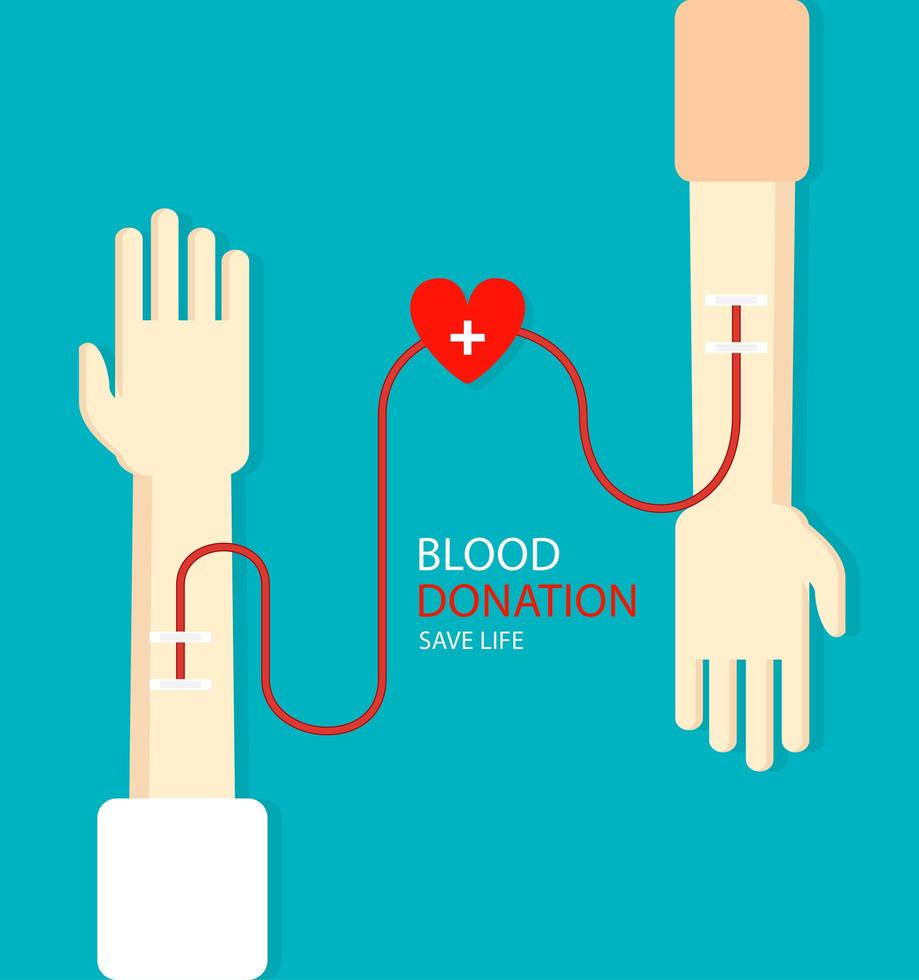
One of the most remarkable contributions that a person can make towards saving lives is donating blood, being blood transfusion one of the eight key life-saving intervention. 1 million of lives can be saved each year by this simple intervention. But many patients requiring transfusion do not have timely access to safe blood, when providing safe and adequate blood should be an integral part of every country’s national health care policy and infrastructure.
Blood and blood products are essential to care for:
- Women with pregnancy and childbirth associated bleeding.
- Children with severe anaemia due to malaria and malnutrition.
- Patients with blood and bone marrow disorders, inherited disorders of haemoglobin and immune deficiency conditions.
- People with traumatic injuries in emergencies, disasters and accidents; and
- Patients undergoing advanced medical and surgical procedures.
Key facts (WHO)
- Of the 118.5 million blood donations collected globally, 40% of these are collected in high-income countries, home to 16% of the world’s population.
- In low-income countries, up to 54 % of blood transfusions are given to children under 5 years of age; whereas in high-income countries, the most frequently transfused patient group is over 60 years of age, accounting for up to 75% of all transfusions.
The whole blood donation rate is an indicator for the general availability of blood in a country. But there is a marked difference in the level of access to blood between low- and high-income countries:
- The median blood donation rate in high-income countries is 31.5 donations per 1000 people
- 15.9 donations per 1000 people in upper-middle-income countries
- 6.8 donations per 1000 people in lower-middle-income countries and
- 5 donations per 1000 people in low-income countries
The Blood donor profile
There are 3 types of blood donors:
- Voluntary unpaid
- Family/replacement
- Paid
An adequate and reliable supply of safe blood can be assured by a stable base of regular, voluntary, unpaid blood donors. These donors are also the safest group with low prevalence of blood-borne infections .
Data shows that globally 33% of blood donations are given by women, although this ranges change widely. Proportionally, more young people donate blood in low- and middle-income countries than in high-income countries.
Data reported a significant increases, of 7.8 million blood donations, of voluntary unpaid blood donations in low- and middle-income countries from 2013 to 2018 with the highest increase in the Region of the Americas (25%) and Africa (23%). The maximum increase in absolute numbers were in the Western Pacific Region (2.67 million donations), followed by the Americas (2.66 million donations) and South-East Asia (2.37 million).
Eligibility to donate: what are the criteria to be included as a donor?
Blood screening
All blood donors are screened for infections disease (HIV, Hepatitis B, Hepatitis C and Syphilis) prior to be able to donate. Also, you can’t donate blood if you do not meet the minimum haemoglobin level for blood donation (in many countries, a level of not less than 12.0 g/dl for females and not less than 13.0 g/dl for males)
Age and Weight
You can donate if you are aged between 18 and 65 (this range may vary a bit depending of the country) and you weigh at least 50 kg (in some countries, donors of whole blood donations should weigh at least 45 kg to donate 350 ml ± 10%)
Health
You must be in good health at the time you donate. You cannot donate if you have a cold, flu, sore throat, cold sore, stomach bug or any other infection. If you have recently had a tattoo or body piercing, you have to wait for 6 months but if the body piercing was performed by a registered health professional and any inflammation has settled completely, you can donate blood after 12 hours.
If you have visited the dentist for a minor procedure, you must wait 24 hours before donating; for major work a month.
Travel
If you travel to areas where mosquito-borne infections are endemic (e.g. malaria, dengue and Zika virus infections), you might wait for some time before you can donate.
Many countries also implemented the policy to defer blood donors with a history of travel or residence for defined cumulative exposure periods in specified countries or areas, as a measure to reduce the risk of transmitting variant Creutzfeldt-Jakob Disease (vCJD) by blood transfusion.
Pregnancy and breastfeeding
Following pregnancy, the deferral period should last as many months as the duration of the pregnancy.
It is not advisable to donate blood while breast-feeding. Following childbirth, the deferral period is at least 9 months (as for pregnancy) and until 3 months after your baby is significantly weaned (i.e. getting most of his/her nutrition from solids or bottle feeding).
You must not give blood:
- If you engaged in “at risk” sexual activity in the past 12 months
- Individuals with a positive test for HIV or that have ever injected recreational drugs can never donate.
Blood donation among black and ethnic minority communities
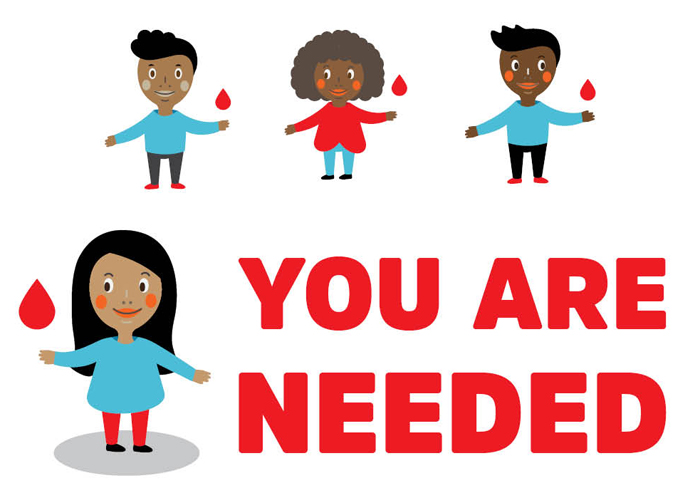
There have been many studies addressing worldwide rate of donation, especially in western countries, underrepresentation of ethnic minority groups amongst blood donors. Even though for everybody donating is considered a form of altruism, ethically and morally important to save lives, we can still notice different behaviours among black, African descendent people and ethnic minority groups concerning donation, making it difficult to fill the gap with white people donation rates. The reason varies, but the ones that were often founded and reported were:
- disinformation/ lack information or knowledge: many people do not know about the possibility to donate and/or are not informed about the need and process of blood donation
- decreased donor eligibility and higher rates of deferrals/exclusion: especially African descendent people are often excluded to donate due to higher incidence of sickle cell disease, cancer, hypertension, diabetes, renal disease, Human Immunodeficiency Virus/ Acquired Immunodeficiency Syndrome, and anaemia. Furthermore, the average haemoglobin value of Africans is between 0.5-0.7 g/dl lower than that of whites and iron-deficiency anaemia is more prevalent among minorities, especially women.
- fear: of pain, needles and of getting an infection from the injection
- religious beliefs, myths about blood donation
- lack of trust between minorities and the blood donation services: Historically, African and minority ethnic groups have had a general mistrust for the medical establishment especially following the report on the Tuskegee syphilis study. The concept of trust is a complex construct and involves a number of interactions. The level of trust is related to previous health care experience, perception of the health care provider, interpersonal skills demonstrated by the provider, level of patient satisfaction and quality of the relationship between the provider and patient. Many ethnic minorities had experienced discrimination, poorer treatment and had a perception of medical disqualification, of not being cared for equally as white people by the healthcare worker. This contribute to the lack of representations of these groups of population in donor services.
Additional barriers to donation are lack of citizenship or national ID cards, socioeconomic and sociocultural issues and language barriers.
Why it is important to address this gap as much as possible?
Efforts to increase representation of ethnic/racial minorities in blood donor populations are important for three reasons:
- Individuals from some minority groups may differ from a country’s majority population in terms of extended blood or tissue typing. For example, the sub-Saharan blood is not totally the same of other ethnicities people and this could create alloimmunization in trasfonded people. This scenario is very important for example considering sickle cell patients. Sickle cell disease patients are best transfused with phenotype-matched red blood cell transfusions to prevent the formation of red blood cell alloantibodies, which can result in haemolytic transfusion reactions and difficulty finding appropriate allogeneic red blood cells for future transfusion
- With demographics shifting towards an increase in individuals from different ethnic/racial minority populations, the presence of a large group of potential new donors is important for ensuring an adequate overall blood supply.
- Participating in blood donation may facilitate the integration of ethnic/racial minority populations to the country’s healthcare system, thereby contributing to a reduction in health inequities for these populations
The possibility to guarantee different types of blood to the community is a great and important resource for the wellbeing of everyone.
Blood donation gender differences
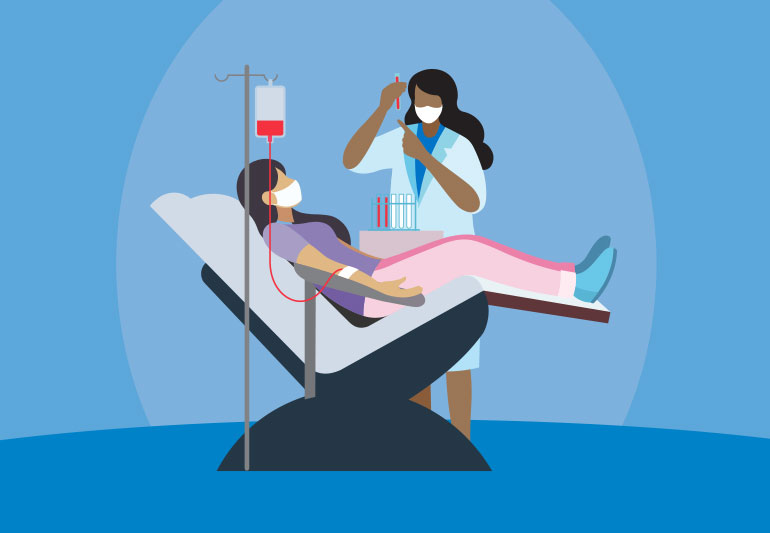
Only in recent years gender perspective has been applied to scientific studies on blood donation, although many publications have long described results that show clear differences between the sexes, from the willingness to donate to becoming regular donors, all of which unquestionably influences current and future blood supplies. Apart from Italy, overall women tend to donate more or have the desire to donate more compared to men.
A review by Ringwald et al. (2010) on keys to get donors to continue giving blood showed that women were fewer than men among regular donors, especially young women under 45, although figures were similar for both sexes aged 45 and older. The main reason cited was pregnancy and only 42% of women returned to giving blood after childbirth. Other reasons are higher rate of temporary deferrals in women, 21% as opposed to 6% in men, mainly due to :
- haemoglobin levels below acceptable limits, anaemia, haematocrit or iron associated with low weight (this inclusion criteria has often been criticized to excluding a lot of women from donating and many have asked to review it)
- fear of needles and/or possible pain
- vasovagal reaction (faint, general sickness, loss of consciousness)
- fatigue and discomfort after the procedure
- hypotension, malaise
- ailments or difficult of finding veins

One important thing to highlight is that any deferral itself albeit temporary limit the possibility of a person to donate. But it has demonstrated that it diminished the likehood of donor to return, if specially the volunteer is a first-time donor. More work should be done to monitor these temporary deferral cases in order to re-call women to donate as soon as they are able to do it.
It is obvious that the need for blood and blood products is universal, but to involve the general population it is not always a very easy act. Governments, national health authorities and national blood services must work together to ensure systems and infrastructure are in place to increase collection of blood from voluntary, regular unpaid donors in accordance with a strong quality assurance system.
This is a call of action to all of you that with a simple act can do bigger changes.
GO DONATE AND SAVE A LIFE!
References:
Whorl Health Organization https://www.who.int/campaigns/world-blood-donor-day/2020
“Racial Differences in Motivators and Barriers to Blood Donation Among Blood Donors “
Beth H. Shaz, MD; Derrick G. Demmons, MPH; Krista L. Hillyer, MD; Robert E. Jones, BS; Christopher D. Hillyer, MD
“ Knowledge and attitude of blood donation among female medical students in Faisalabad“
Saba Tariq, Sundus Tariq, Shireen Jawed, Saffee Tariq
“Gender differences in giving blood: a review of the literature “
Marco Bani, Barbara Giussani
” Women as whole blood donors: offers, donations and deferrals in the province of Huelva, south-western Spain”
Dalmiro Prados Madrona, María Dolores Fernández Herrera, Dalmiro Prados Jiménez, Sonsoles Gómez Giraldo, Rita Robles Campos
“Interventions to Increase Blood Donation among Ethnic/Racial Minorities: A Systematic Review ”
Jennifer K. Makin , Kate L. Francis , Michael J. Polonsky , and Andre M. N. Renzaho
“Minority Donation in the United States: Challenges and Needs”
Beth H. Shaz, Christopher D. Hillyer
“Blood donation barriers and facilitators of Sub-Saharan African migrants and minorities in Western high-income countries: a systematic review of the literature ”
E. F. Klinkenberg, E. M. J. Huis In’t Veld, P. D. de Wit,A. van Dongen, J. G. Daams, W. L. A. M. de Kort1, &M. P. Fransen
 The Feminist Health CIC