
For clarification, on this article, we will be using the term “woman” to refer to those with “uterus” and only for the biological purpose.
In the last article we discussed the importance and need of a change or maybe a revolution in the Dermatology field, from the academic to the clinical practice point of view. This need comes from a lack of diversity and inclusivity in providing a wide range of educational tools, examples and practices, with the consequence of poor and late clinical diagnosis, bad patients outcomes and difficulty in the medical practices. We wanted also to give you other insights, this time regarding the most common dermatologic condition in women. Even though skin conditions can affect anyone, pregnancy, lifestyle, and life habits can cause different types of skin conditions between men and women. And as you might know women produce higher amount of oestrogen and progesterone that might cause the development of some particular skin condition more often in women than in men. Here are some of the more known and studied diseases now:
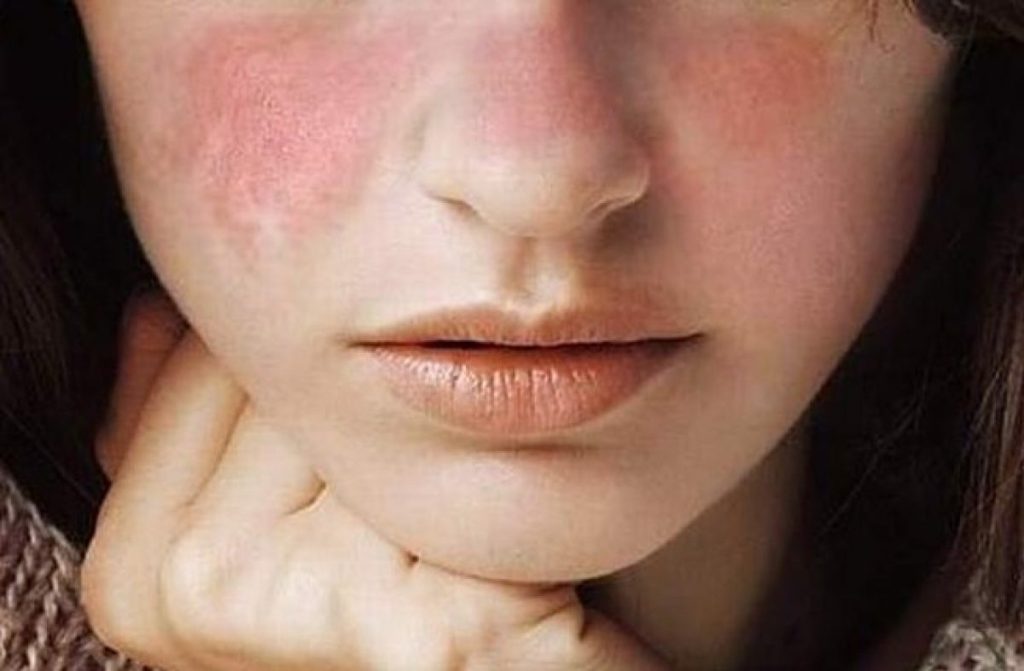
- Connective tissue diseases: includes scleroderma, morphea, dermatomyositis, primary Sjögren syndrome and systemic lupus erythematosus. The Lupus Syndrome is an autoimmune condition, appearing with a combination of symptom and the characteristic “butterfly rash on the face”. Other sign and symptoms associated with it are sun sensitivity, joint pains, chest pains, anaemia, and neurological and psychological changes
- Pityriasis rosea: is a skin condition causing a temporary rash of raised red scale patches on the body. The cause is unknown but might be a viral infection. It’s overall prevalence in the United States has been estimated to be 0.13% in men and 0.14% in women.
- Herpes progenitalis and condyloma acuminatum: both are due to viral infections, herpes virus for the first and the human papilloma virus for the second, generally transmitted by direct contact with skin surface or secretion. The most frequent way of transmission is during unprotected sex. Herpes progenitalis appears near the pubis, clitoris or other parts of the vulva, buttocks, or anus; while condyloma acuminatum appears like a pink out projected lesion on the labia majora, vagina or even in internal surfaces as opening of the urethra, inside the vagina or cervix. In most cases you might not have symptoms rather than the lesion, until they develop pain, itching, redness, or discomfort.
- hidradenitis suppurativa: for reasons that are unknown, is more diagnosed in women compared to men. It’s thought to affect about 1 in 100 people and it occurs near hair follicles where there are sweat glands, usually around the groin, bottom, breasts, and armpits. It can cause pain and its long-term presence can cause abscesses and scarring on the skin.
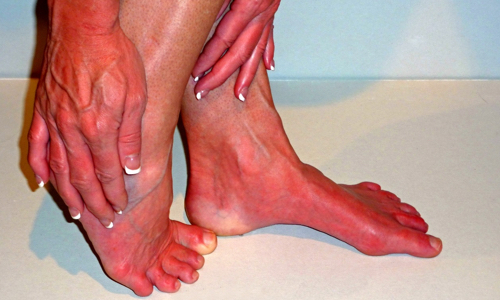
- Erythromelalgia: is a rare condition that causes episodes of burning pain and redness in the feet, and sometimes the hands, arms, legs, ears, and face. The 3 main symptoms are heat, pain, and redness in the skin. The feet are most affected, but the hands, arms, legs, ears, and face can be too. It seems to be caused by a neuropathological and microvascular alterations. Two studies, one in Norway and another in the USA, estimated a 1:24 male to female ratio in the first and a 1:56 male to female ratio (in the second) of the condition.
- Venous stasis syndrome also known as Chronic venous insufficiency (CVI) is a medical condition in which blood pools in the veins, straining their walls. It manifests clinically as a chronic dependent leg edema with leg pain, skin hyperpigmentation and induration. Its chronic presence can cause swelling and ulcer formation. The most common cause of CVI is superficial venous reflux which is a treatable condition. Rates of CVI are higher in women than in men. Other risk factors include genetics, smoking, obesity, pregnancy, and prolonged standing. This condition typically affects the legs.
- Adult acne: a study conducted by the American Academy Dermatology founded that women tend to get adult acne more than men. It tends to be more situated in the jawline and chin and appears red, painful with possibility of developing of bumps and as cyst.
- Lichen Sclerosis: is a rare disease characterized by a chronic inflammatory skin disorder that typically affect women before puberty or after menopause. It appears as patches with fine scale or thickening.
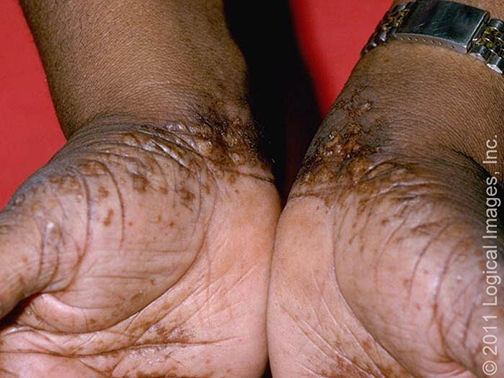
- Perioral dermatitis: a common condition usually showed as a face rash around the mouth.
- Rosacea: an inflammatory condition often associated with skin redness and pimples, triggered by sun and stress.
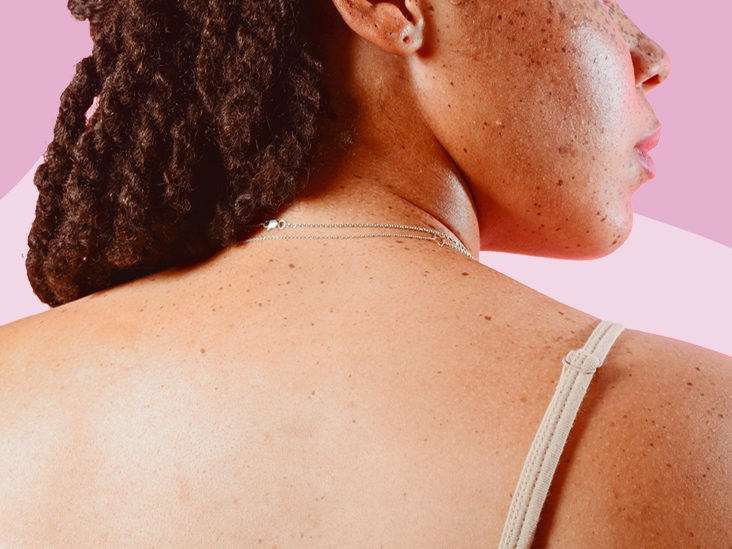
- Melanoma (in younger women): while men generally die of it, women under 50 years generally develop it more frequently. Lifestyle habits as tanning, not using sunscreen cream increases the risk. It appears as a dark spot anywhere in the body and it normally features an irregular shape and more than one colour.
- Intertrigo: is a skin rash due to a candida overgrowth in warm and moist side and skin folds of the body. In women happens more often due to skin to skin long contact during the day in women with larger breast and wearing of tighter underwear or leggings. It appears as a red and /or macerated rashes.
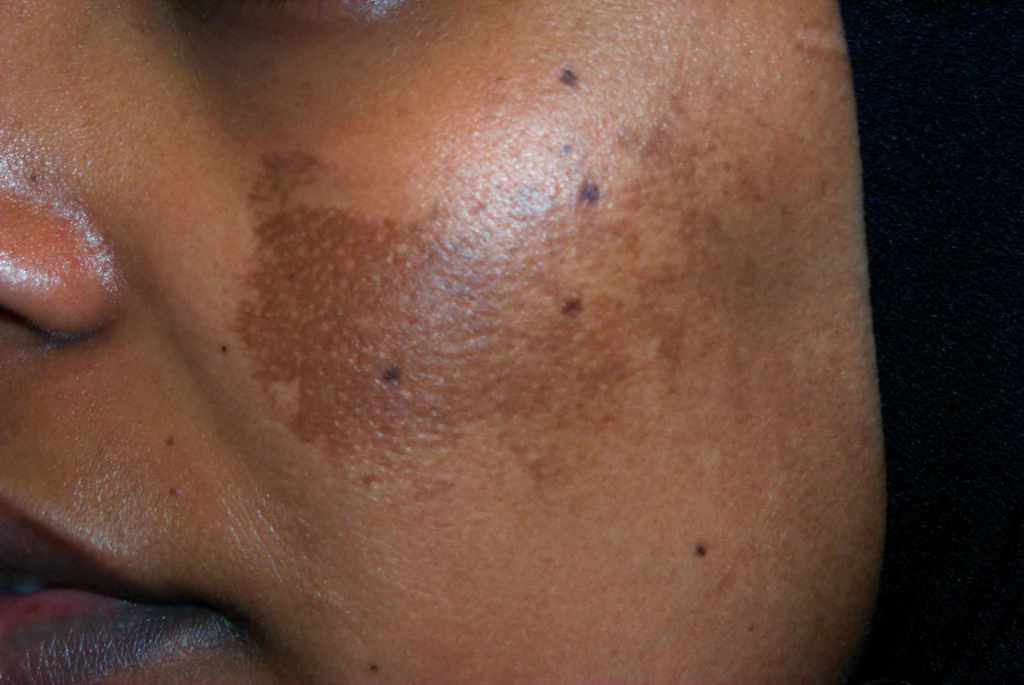
- Melasma: normally tied to hormonal changes, especially during pregnancy, it’s often called “mask of pregnancy” and can worsening by sun exposure or with the using of hormonal contraceptives. It characterized by a brown or blue-grey patches or freckle-like spots.
The list in not obviously exhaustive but can be a starting point to make clinicians and researchers to reflect on how many factors to be considered when addressing a skin condition. Some of the conditions that we mentioned above could be even familiar to you: meaning we might be more prone to develop it hence the need to be monitored. For any doubts and/or question take an appointment with your GP and/or dermatologist to discuss about your concern.
References:
1- Andersen LK, Davis MD. Sex differences in the incidence of skin and skin-related diseases in Olmsted County, Minnesota, United States, and a comparison with other rates published worldwide. Int J Dermatol. 2016;55(9):939-955. doi:10.1111/ijd.13285
2- Kristine Fellizar Aug. 20, 2019 Types Of Skin Conditions Women Are More Likely To Have, According To Experts
3- https://www.nhs.uk/conditions/pityriasis-rosea/
4- Habif, Thomas P (2004). Clinical Dermatology: A Clinical Guide to Diagnosis and Therapy (4th ed.). Mosby. pp. 246–8. ISBN 978-0-323-01319-2.
5- https://en.wikipedia.org/wiki/Pityriasis_rosea#cite_note-habif-21
6- https://en.wikipedia.org/wiki/Genital_wart
7- “Genital Herpes – CDC Fact Sheet”. 9 February 2017. Retrieved 20 December 2017.
8- https://en.wikipedia.org/wiki/Genital_herpes#cite_note-CDC2017Fact-1
9- https://www.nhs.uk/conditions/hidradenitis-suppurativa/
10- https://www.nhs.uk/conditions/erythromelalgia/
11- Kalgaard, OM; Seem, E; Kvernebo, K (September 1997). “Erythromelalgia: a clinical study of 87 cases” (PDF). Journal of Internal Medicine. 242 (3): 191–7. doi:10.1046/j.1365-
12- Reed, KB; Davis, MD (January 2009). “Incidence of erythromelalgia: a population-based study in Olmsted County, Minnesota”. Journal of the European Academy of Dermatology and Venereology. 23 (1): 13–5. doi:10.1111/j
13- https://en.wikipedia.org/wiki/Erythromelalgia#cite_note-Kalgaard_-_1997-50
 The Feminist Health CIC