
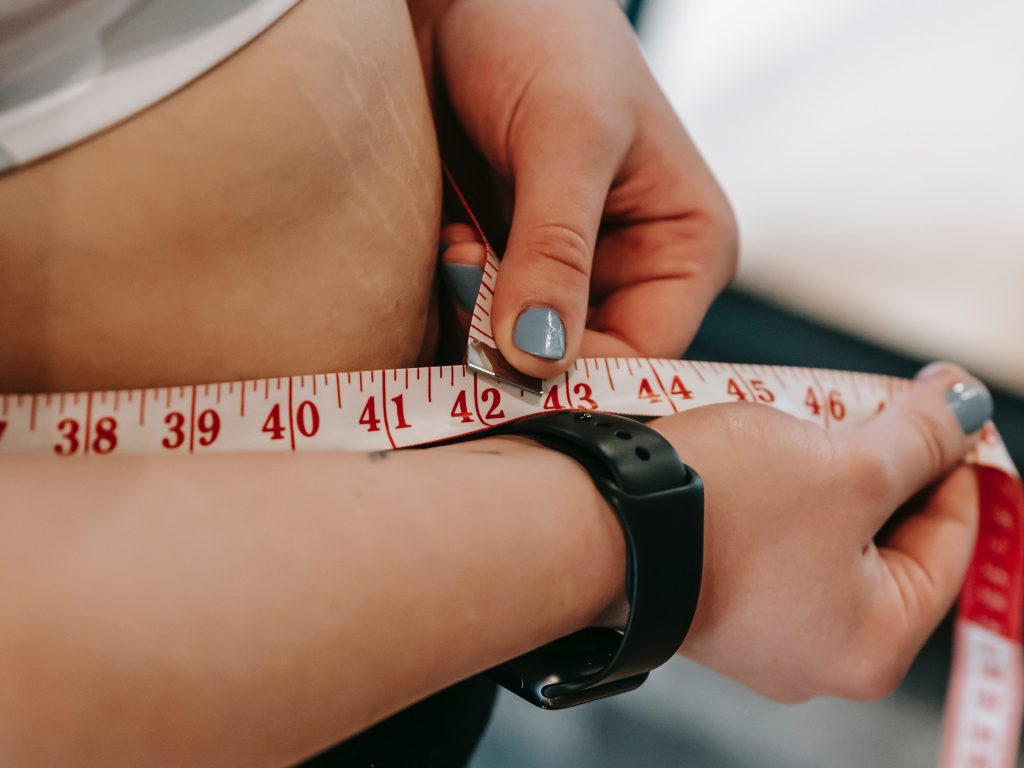
“Body mass index measures, by means of a chart, whether a person is underweight, healthy, overweight, obese or morbidly obese, based on one’s mass and height.”
For most of my life I have been in the ‘overweight’ category of the BMI scale, which led to body image issues, which I had to learn to overcome. Looking back now, I don’t believe I was ‘overweight’ but it was rather that my physique wasn’t factored into my BMI. This is true for almost all black women, black men and people of colour in general because the scale was never made with the build of people of colour in mind.
In the nineteenth century, Lambert Quetelet, a Belgian mathematician, created the scale to assist the government in distributing resources based on the degree of obesity in the population. It was never intended to be used in measuring one’s build, health or individual body fat. His test subjects were Scottish and French, mostly men. This shows people of colour excluded from these studies. The scale was further studied by Ancel Keys and a team of researchers, who mainly studied individuals from the United Kingdom, Finland and Italy. This study, however, did include people from Japan and South Africa. People of colour may have been included but the notes on the South African study group were, “could not be suggested to be a representative sample of Bantu men in Cape province let alone Bantu men in general.” and the rest of the notes read, “All but Bantu men.”. Hence, showing black people being completely disregarded. This dismissal of black people actually foreshadows how more than 100 years later, physicians still overlook physiological symptoms like pain, discomfort, etc. in people of colour.
The lack of research on the efficiency of the BMI scale in people of colour has led to misdiagnosis and mistreatment. It overestimates fatness and health risks for black people, according to the Endocrine society. According to the World Health Organisation (WHO), it underestimates fatness and health risks for Asian people.
Aside from the misdiagnosis of physical health problems, BMI has led to psychological and economical problems stemming from the desire to be considered ‘healthy’ and the pressure society puts on people, especially women, to be a certain size. These range from bulimia, body dysmorphia and anorexia to depression and anxiety. Then there are insurance companies taking advantage by increasing the cost of premiums the higher one’s BMI is. In an aim to reduce one’s weight, people end up feeding the weight management industry which was valued at $192.2 billion in 2019 and is expected to grow to $295.3 billion in 2027.
BMI is not an accurate measure of the health of a person as it completely disregards muscle and bone mass, water weight, etc. It simply estimates their health and further tests need to be done to get a definitive result. This includes tests of the thickness of skin folds using calipers, the analysis of one’s diet, physical activity and taking one’s family history. However, due to it being inexpensive and readily available, the BMI scale is not going anywhere anytime soon.
The unreliability and related history of BMI further emphasizes its irrelevance in medicine today, especially in people of colour. One has to wonder, is there ever going to be a time when medical studies cater for people of colour? And until then, should we continue adhering to ‘rules’ set up with no evidence on their effects on us?
References
● https://www.cdc.gov/healthyweight/assessing/bmi/adult_bmi/index.html
● https://www.npr.org/templates/story/story.php?storyId=106268439#:~:text=The%20B MI%20was%20introduced%20in,the%20government%20in%20allocating%20resourc es
● https://elemental.medium.com/the-bizarre-and-racist-history-of-the-bmi-7d8dc2aa33b b
● https://www.news-medical.net/health/What-is-Body-Mass-Index-(BMI).aspx
● https://www.alliedmarketresearch.com/weight-loss-management-diet-market#:~:text= The%20weight%20loss%20and%20weight,7.0%25%20from%202021%20to%20202 7.
Kupakwashe Antonette Chimonyo
Kupakwashe is a writer for The Feminist Health Blog and hopes to support people, even if it’s only one person, lean more into who they are and to appreciate themselves. She believes self love is the root of peace and happiness.
 The Feminist Health CIC