
Last week I went to a very interesting and I believe, an important event in central London: the presentation of the first project report about Black Women’s reproductive Health by the Black Women’s Reproductive Health Project.
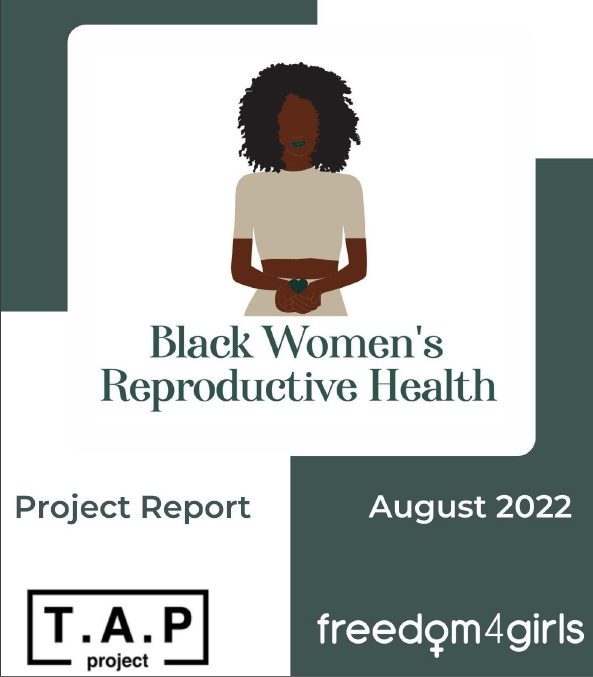
The project and the report were born with the need of highlighting the discrimination, inequalities, difficulties, barriers and malpractice that black women (considering gender fluid, no binary and LGBTQ+ community members) face everyday when approaching to healthcare workers and services.
The report results are very clear and simple: there is a problem. I won’t be here explaining and showing all data, because the report is out and you can easily access through their Instagram page and/or sign to their newsletter. Obviously is not representative of all the black female population in the UK and cannot be directly transposed to black women in Europe, but definitely confirms what other data from more comprehensive US and Asian studies are available. If women, in general, face discrimination and underestimation of their symptoms, black woman situation is worst due to racism and the general concept of the myth of the “strong black body”. This has led to cases of delay of diagnosis, complications (sometimes even fatal) and mistrust by the black community.
But what really I thought was important to share with you ( not that the report is not relevant, contrary, again, I am here to tell you go and read it!) are the messages and key points that came out from the amazing guests that formed the panelist intervention (Dr Jenny Douglas, Prof Heidi Safia Mirza, Advocates Christine Deand and June-Ann Joseph) and the different Q&A.
I don’t know if there is a recording of the panel (I will let you know) but I want to share what I came back home with and, in order to start building policies and a legacy for other black women out there are:
- Many women have no voice: If we feel we are not listened and our condition underestimate, keep asking, keep searching (from valid resources)
- There is the need for more research about black woman health by black researchers
- There is the need to decolonize the methodology of health education and research – who speaks to who?: even though we are finally seeing more diversity amongst healthcare workers, those are still studying and working in a very white and Euro-centric system. For this reason they might not act in the profit of the patient, but of their work environment
- We didn’t notice but all the reproductive rights we are loosing is the legacy of the history of reproductive control of the black woman’s body: during the panel it was mentioned both the horrible reproductive campaign in South London only for migrants women of an injectable contraception
- We need healthcare facilities focused and specialized in black women: this could be a dream place for all of us and were mentioned two examples existing in the US (Black woman health Study and the Black Woman Health Imperative)
- There is the need to fight the complexity and stigma of reproductive health within the black community: how many of our relatives have ever told us of a clinical condition that affected them or any other family member that could be hereditary or with familiarity? Very few, because sexual and reproductive health is still a taboo in many minority ethnic community.
But what I believe the main message I took with me to home is that in order to have impactful changes we need to go from isolation to cohesion: what history has taught us is that when there is a community, changes can be made. And this is what the Feminist Health Blog as many other communities existing around us and are working hard for our rights.
Support these communities and their work and thank you again for the love and support you are giving us!
Find the Project Report here for a good read!
 The Feminist Health CIC