
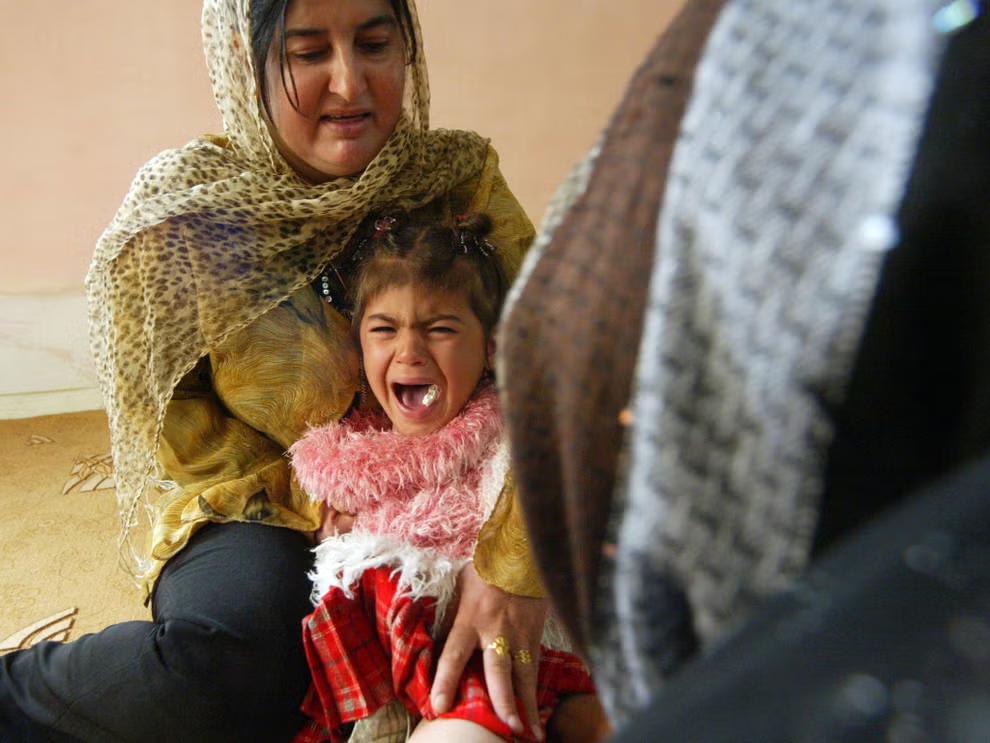
Female Genital Mutilation (FGM) is not a problem only for middle and low-income countries, but it is a global concern affecting many populations from Africa, Asia and the Middle East. Even with the presence of laws that identified the procedure as a crime, we are still far from saying that it is a rare practice:
- More than 200 million girls and women alive today have undergone female genital mutilation (FGM) in 30 countries in Africa, the Middle East and Asia where FGM is practised.
- FGM is mostly carried out on young girls between infancy and age 15.
- FGM is a violation of the human rights of girls and women.
- Treatment of the health complications of FGM is estimated to cost health systems US$ 1.4 billion per year, a number expected to rise unless urgent action is taken towards its abandonment.
Due to the nature, one of the settings where FGM and the risk for young girls could be identified is the healthcare setting. That is why all strategies addressing violence against women, domestic abuse and gender-based violence highlight the important roles of doctors, nurses and other healthcare staff and the need to train them on how to identify possible people or situations at risk, for example, a trip in their country of origin out of any holiday season, they avoid physical visit or change of the mood and behaviour. Obviously, there are some countries more at risk of FGM compared to others (Somalia, Eritrea, Somalia, Egypt, Sudan, Sierra Leone, Gambia and Ethiopia).
Knowing all this, when we talk to or visit people from these countries, we start to be more careful and worried, in order to detect any anomaly. But, there is a “but.” We have to be very careful that the worrying does not convert into an assumption.
I was very surprised when I read the article from Saffron Karlsen et al (2020) “Putting salt on the wound’: a qualitative study of the impact of FGM – safeguarding in healthcare settings on people with a British Somali heritage living in Bristol, UK”, where focused groups of women and men from Somalia where interviewed in regards of current approaches to FGM-safeguarding. What the participants referred to was very important and confirmed the need for decolonization and the removal of white and European saviourism from medical practice. None of them denied the importance to criminalize FGM and those that support it, but often people assume that every person from certain countries has experienced FGM, has the intention to FGM or supports FGM. They referred to their experiences and visit to GP or other clinics as intrusive, insensitive, and embarrassing. Sometimes questions were asked even though they were not connected with the reason why the person was there, unfolding the preference of collecting data instead of making the person comfortable.
Where is the connection between decolonisation and saviourism? you might ask! I will answer by quoting what one of the participants said “A hundred years ago, this country (UK) had a different culture from today. Are the people still living in the same way? They modernized. So, in Somalia, we are modernized too”!
Straight to the point! We still look at these countries as undeveloped, poor, and not educated. We do not consider that development happened and still happening everywhere, maybe not at the same pace, but it happens. And we have to start to remove the mindset that everywhere apart from the Western world is worst, as Prof. Hans Rosling, Ola Rosling and Anna Rosling Rönnlund explain in their book “Factfullness: Ten Reasons We’re Wrong About The World – And Why Things Are Better Than You Think”. Changes, good and positive happen everywhere and even though FGM is not totally eradicated we cannot consider every person in the same way, at the same condition and at the same risk. Listen to your patient, carefully, take into consideration why she is there, make her comfortable and value all the factors influencing her care and well-being. Healthcare workers, are not here just to save people, but to take care of them and their well-being.
References:
https://www.nhs.uk/conditions/female-genital-mutilation-fgm/
‘Putting salt on the wound’: a qualitative study of the impact of FGM- safeguarding in healthcare settings on people with a British Somali heritage living in Bristol, UKSaffron Karlsen , Natasha Carver, Magda Mogilnicka, Christina Pantazis
 The Feminist Health CIC