
Many times when I tell people about my profession as a Public Health Consultant, I often receive the comment, “But this is not the typical medical doctor role.” In response, I tend to debunk the romantic and honorable image of the clinical medical doctor by explaining, “Hospitals are actually companies and businesses. We produce an offer, and our services have a cost. One field of public health is to ensure we manage the resources available to meet the demand.” This often shocks most people because this side of health is rarely spoken about, yet it is responsible for issues such as waiting lists, resource migration, and ultimately, a lack of empathy.
Exactly, you read that correctly. When it comes to healing the human body, empathy should be the main character and ingredient in becoming a doctor. And it is, in my opinion. However, the pressures that health systems and professionals face worldwide unfortunately do not always allow them to employ empathy, or perhaps the correct amount of it, with their patients. This is often due to the need to visit many other patients on the list.
While visiting Florence, I heard about the story of a woman who was diagnosed of breast cancer, which recurred five years later with a prognosis of three months to live. After hearing this, she and her husband were moved to a windowless corridor where they were left to process the news and while sitting in the corridor they discussed the need for somewhere ‘better’ for people with cancer to go, outside of but nearby to the hospital. Even though hopefully the doctor used the correct approach to deliver the information, the fact that there was no space or further support available to process the news truly struck a chord with the woman and her husband, highlighting the need for more empathy, whether from a person or even from the environment.
This story, which was referred to me, is that of Maggie Keswick Jencks, a Scottish writer, artist, and garden designer who, along with her husband Charles Jencks, an American cultural theorist, landscape designer, and architectural historian, co-founder the Maggie’s Care Centre.

The idea behind the Maggie’s Care Centre was to create a space where people diagnosed with, suffering from, or surviving cancer, along with their relatives and friends, could receive the support needed to process and cope with their clinical condition. They aimed not to replace cancer therapy but rather to provide a caring environment.
Maggie joined a chemotherapy trial, lived for another 18 months, and collaborated with her medical team, including Laura Lee, now Maggie’s Chief Executive, to redefine cancer care. She envisioned welcoming centers where patients, families, and friends could find support and information. Maggie emphasized the importance of living joyfully despite the fear of dying. The first Maggie’s centre opened in November 1996 in Edinburgh, near the hospital where she received treatment.

The beauty of these centers lies not only in their purpose but also in the fact that, being both co-founders in the architectural and design circle, the centers, spanning across the UK and globally in places like Spain, China, and Tokyo, have been designed by internationally famous architects. For instance, the latest one was designed by Studio Libeskind for the Royal Free Hospital in London.
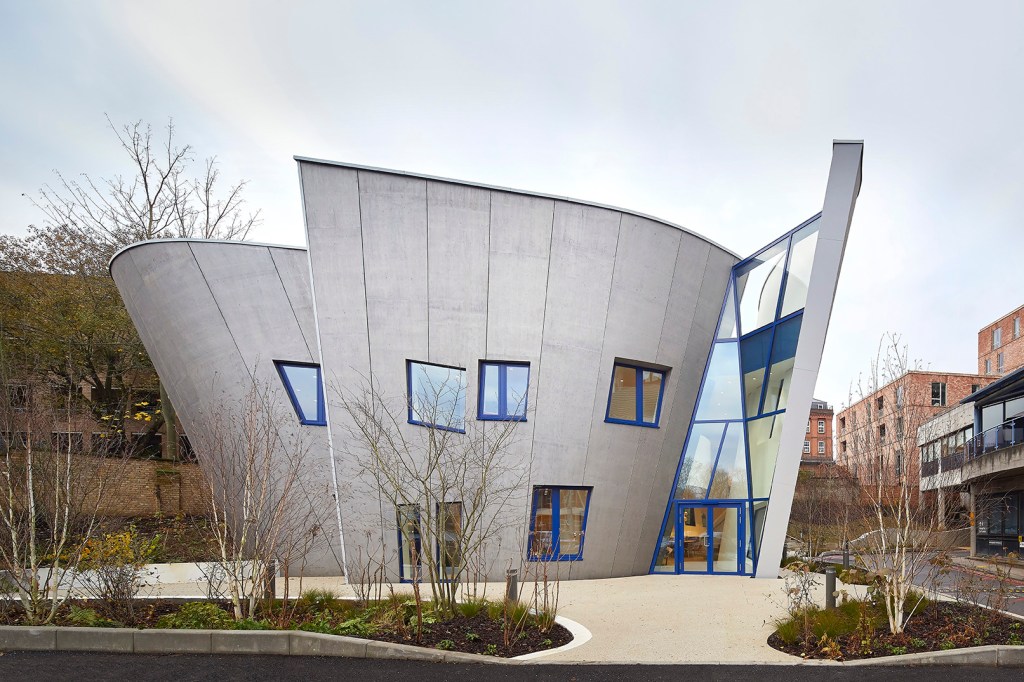
How did we come to discuss Maggie’s Center during an afternoon tea in the heart of Florence, and why did this story leave such a strong impression on me that I felt compelled to share it with you?
Firstly, I was speaking with people working in the art industry and all Maggie’s centers share a unique and amazing architectural style. But what truly brought us to discuss it was my continuous dialogue on health inequalities and the importance of social determinants. I emphasized how the term “health wellbeing” is broad and needs evaluation from multiple aspects.
“Often health systems focus only on the acute and emergency situations, forgetting how we can continue to guarantee good health even after people leave the hospital. How can we support people in their lives when they have faced a particular health challenge, and their environment is very challenging, making it difficult to find a new balance?”
Maggie’s Centers attempted to answer this question and provide a solution regarding cancer. I believe this approach should be considered for many other debilitating conditions such as diabetes, mental health issues, abortion, death, and the list could go on.
Additionally, I am proud and amazed by how many women have led innovative ideas and projects. This platform serves to give them the recognition they deserve.

 The Feminist Health CIC